




By Attorney Guy Rubin
Most people involved in a serious car crash on US-1 through Stuart, at the Kanner Highway interchange, or on I-95 through Martin County assume that the question of fault is black and white. Either the other driver caused the accident, or they did not. However, the reality of how Florida law actually works, particularly since a significant change took effect in March 2023, is more nuanced and considerably more consequential. For those dealing with the aftermath of a crash and trying to understand their options, the guidance that Stuart car accident attorneys provide on comparative fault is often the most important legal education they receive. This article explains why.
Key Takeaways
- In March 2023, Florida adopted a modified comparative fault system under Florida Statute Section 768.81, replacing the previous pure comparative fault system. Under the new rule, a plaintiff who is found to be more than fifty percent at fault cannot recover any compensation, regardless of the severity of their injuries.
- Under the modified system, a plaintiff who is partially but not primarily at fault recovers compensation reduced by their assigned percentage of fault. For example, a plaintiff found twenty percent at fault with $100,000 in damages would recover $80,000.
- The fifty percent threshold is the most aggressively contested number in Florida car accident litigation. Insurance adjusters are trained to push fault assignments toward or beyond this threshold because crossing it eliminates recovery entirely.
- Fault percentage is not determined by a neutral calculation. Rather, it is determined by the available evidence, the quality of the legal arguments made, and the persuasiveness of expert witnesses. All three factors are influenced by the quality of legal representation.
- According to the Florida Department of Highway Safety and Motor Vehicles, Florida sees over 400,000 reported crashes annually, a significant portion of which involve disputed liability. The 2023 law change made the outcome of those disputes more consequential than at any point in recent Florida legal history.
- The most common sources of comparative fault arguments in crashes in Stuart and Martin County involve speeding, failing to maintain proper lane discipline on multi-lane segments of US-1, failing to yield at the intersections of US-1 and Kanner Highway, and distracted driving, as evidenced by phone records and vehicle data.
Florida’s 2023 Shift: From Pure to Modified Comparative Fault
For most of the past several decades, Florida operated under a pure comparative fault system. Under this system, a plaintiff who was 90% responsible for a crash could still recover 10% of their damages from the other party. This rule protected injured plaintiffs broadly, but it was widely criticized for enabling recoveries in cases where the injured party was largely responsible for the crash.
In March 2023, the legislature changed this with the passage of HB 837, amending Florida Statute Section 768.81 to adopt a modified comparative fault standard. Under the new system, the fifty percent threshold functions as an absolute bar. A plaintiff found to be fifty-one percent at fault recovers nothing. A plaintiff found to be exactly fifty percent at fault recovers fifty percent of their damages. Florida law may allow you to file a claim even if you were partially at fault.
This is a structural change that alters the incentives and strategies of every party involved in a Florida car accident claim. Insurance companies, already motivated to assign partial fault to injured plaintiffs to reduce payouts, now have a specific target: push the plaintiff past the fifty percent threshold. Doing so converts a significant payout into a zero-dollar resolution.
Understanding this dynamic is the practical reality that shapes every contested car accident claim in Martin County.
How Fault Is Actually Determined
A neutral arbiter is the product of a contested process in which both sides present evidence, argue interpretations, and attempt to persuade an adjuster, mediator, or jury.
In a Florida car accident case, the evidence that determines fault assignment includes:
- The police report and the responding officer’s observations
- Statements made by the drivers at the scene
- Witness accounts
- Surveillance and dashcam footage
- Physical road evidence, including skid marks and debris patterns
- Vehicle damage patterns and their relationship to the point and direction of impact
- Electronic data from the vehicles, including speed, braking, and steering inputs recorded by event data recorders
- The analysis of an accident reconstruction expert.
Each of these categories of evidence can be developed to support a specific fault narrative or allowed to deteriorate and become unavailable. For example, surveillance footage from businesses along US-1 or from Florida Department of Transportation (FDOT) cameras at major intersections in Stuart is typically overwritten within thirty to sixty days. Vehicle event data may be lost when a vehicle is repaired. Skid mark evidence fades and becomes obscured by subsequent traffic. A Stuart car accident lawyer can help navigate these types of claims.
Therefore, the fault determination in any serious crash in the Stuart area is a function of what evidence was preserved and how effectively it was used. A plaintiff who preserves all available evidence and retains an accident reconstruction expert to analyze it is in a fundamentally different position than a plaintiff who does not.
The Arguments Insurance Companies Make and How to Counter Them
In the vast majority of contested Florida car accident cases, insurance companies defending claims by at-fault drivers have a standard toolkit of comparative fault arguments that they deploy. Understanding these arguments in advance allows legal counsel to prepare specific counterarguments.
Speed and following distance
The most common comparative fault tactic in Florida rear-end collision cases is arguing that the plaintiff was traveling above the posted speed limit or following too closely. Even when the other driver initiated the crash, evidence of speed or following distance on the plaintiff’s part is used to assign a percentage of fault, which reduces recovery.
The counterargument requires evidence. This can include dashcam footage establishing speed, GPS data, and, in some cases, expert analysis of the stopping distance required given the reaction time and conditions. The absence of evidence supporting the insurer’s speed argument does not automatically win the case. It simply shifts the argument to credibility.
Distracted Driving
In Florida car accident litigation, phone records, app usage data, and vehicle infotainment system logs are increasingly accessible. Insurance companies request these records for plaintiffs as routinely as they do for their own drivers. Evidence of phone use, even passive engagement such as receiving a notification, in the seconds before a crash creates a comparative fault argument to which juries have proven receptive.
To challenge distracted driving allegations, you need affirmative evidence that the plaintiff was not distracted. If the allegation is based on phone records, you also need a careful analysis of the data to determine what it actually shows versus what the insurer claims it shows. Call records document when a call was connected. However, they do not establish that a driver was speaking rather than using a hands-free system.
Failure to Yield and Intersection Behavior
The intersections of US-1 and Kanner Highway and the merge patterns on I-95 around the Martin County corridor are among the most commonly litigated fault locations in crash cases in the Stuart area. Arguments that a plaintiff failed to yield properly or entered an intersection on a signal phase that did not give them the right of way require a careful review of traffic signal timing data, intersection camera footage, and the responding officer’s observations at the scene.
The Role of Expert Witnesses in Contested Fault Cases
In any crash case in the Stuart area where fault is genuinely disputed and the damages are substantial, expert witnesses play a central role in determining the outcome.
Accident reconstruction experts analyze physical evidence from the crash scene, vehicle damage patterns, road conditions, and electronic data to determine how the crash occurred and which party was at fault. When presented by a credentialed expert at deposition or trial, this opinion carries more weight than the parties’ own accounts of what happened.
Medical experts establish the connection between the crash mechanics and the specific injuries sustained. This is important for calculating damages and for countering arguments that the injuries were pre-existing or not caused by the crash.
Economic experts calculate the present value of future lost earnings and future care costs. These costs are often the largest components of serious injury damages and are most aggressively disputed by insurance carriers.
The decision to retain experts and which experts to retain is strategic and varies by case. In a contested liability case in Martin County involving significant damages, investing in expert analysis almost always yields a meaningful return in the form of a better-documented and more credibly supported claim.
Frequently Asked Questions
Does the fifty percent rule apply to all types of civil claims in Florida?
The modified comparative fault rule under Florida Statute Section 768.81 broadly applies to negligence-based civil claims in Florida. There are limited exceptions for certain intentional torts and specific statutory causes of action. However, for personal injury claims resulting from car accidents, the fifty percent bar applies.
Can the allocation of fault change between the insurance negotiation phase and trial?
Yes, because the fault percentage assigned by an insurance adjuster during negotiations is not binding. At trial, a jury makes its own independent determination of fault based on the evidence presented. This works in both directions. For example, a plaintiff who was assigned forty percent fault by the adjuster may receive a lower or higher allocation from a jury, depending on how the evidence and arguments are presented. This uncertainty is one reason why most Florida car accident cases settle before trial.
What evidence should you preserve immediately after a crash in Stuart?
Preserve the following:
- Photographs of all vehicle positions before they are moved
- Photographs of the road surface, signal positions, skid marks, and weather conditions
- Documentation of all visible injuries at the scene and in the days following
- The names and contact information of every witness
- The other driver’s complete identifying and insurance information
- Any visible surveillance cameras in the area Report the crash to your attorney as soon as possible so that evidence preservation demands can be issued before surveillance footage is overwritten.
This article is intended for general informational and educational purposes only and does not constitute legal advice. Florida law may vary based on the specific facts of each case and individual circumstances. Readers should consult a qualified Stuart car accident attorney for advice specific to their situation.
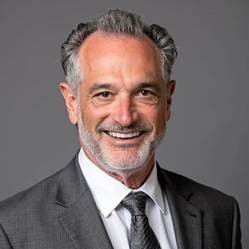
Author Bio: Guy has been a trial lawyer since 1987, handling hundreds of cases through trial at the highest levels in our legal system in the state and federal courts. He has achieved numerous 7 and 8-figure settlements and verdicts during his career.
Website: https://www.therubinfirm.com/
Email: grubin@therubinfirm.com
Contact: +1 (772) 283-2004
State/Country: Florida, United States