





Most people assume all GPS tracking apps work basically the same way, but that assumption costs them. Some apps eat battery life trying to keep up with real-time position refreshes. Others struggle to maintain an accurate GPS signal the moment a car enters a tunnel or a dense urban area. After reviewing dozens of options across categories from family safety to device recovery, this guide covers three apps that actually deliver where it counts: iSharing, Zood Location, and Apple Find My.
How this ranking was put together
Public information drove every decision here. Feature details were pulled from official websites, user review platforms, and app store data. Only apps with a clear track record in location technology made the cut. Options without verifiable real-world use at scale were left off the list entirely.
→ See the full research breakdown
- iSharing – Best for family location sharing and teenage driver monitoring
- Zood Location – Best for private location sharing for friends and family
- Apple Find My – Best for device and asset tracking
Why GPS Tracking Apps Are Worth a Closer Look
Picking the right GPS tracking app isn’t a casual decision, especially when safety is on the line. The wrong choice can mean stale location data that’s already 10 minutes old, or an app that drains a phone battery by midday just to refresh every 30 seconds. Urban environments make this harder too, because buildings, tunnels, and signal interference all chip away at GPS accuracy radius, sometimes by tens of meters. A well-chosen app handles these conditions without requiring constant manual intervention. When the app runs quietly in the background with low battery usage and fast location updates, the people relying on it actually trust it. And that trust is what turns a tracking tool into a genuine safety net.
Comparing the 3 Best GPS Tracking Apps
Note: All data in this table is sourced from review platforms and the official websites of the listed companies.
| Company Name | Years Operating | Headquartered In | Rating |
| iSharing | 15 years | Irvine, CA | 4.8 (224,014 reviews) |
| Zood Location | 5 years | Coventry, UK | Not publicly listed |
| Apple Find My | 6 years | Cupertino, California | Not publicly listed |
- iSharing – Best for Family Safety and Teenage Driver Monitoring
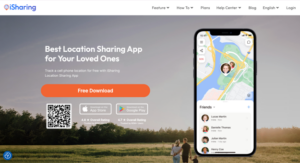
What services does iSharing offer?
Founded in 2010, iSharing focuses on real-time location sharing built for families and close friend groups. The app covers place alerts, panic alerts, driving reports, and location history, all under one roof. Parents monitoring teenage drivers will find a purpose-built feature set here that most general tracking apps don’t come close to matching. For anyone who wants to keep tabs on a new driver without feeling like they’re running industrial fleet software, the mobile friendly teen driver tracking app by iSharing sits right at the intersection of usability and genuine safety coverage. Over 66 million downloads back that up.
Why Does iSharing Stand Out for GPS Tracking Apps?
iSharing solves the problem of parents needing detailed driving behavior data without paying enterprise-level prices. The app delivers driving reports, geofence alerts, and panic features in a genuinely free tier. That combination of depth and affordability is rare in the family tracking category and hard to match.
What Users Are Actually Saying:
With a 4.8 rating from over 224,000 reviews, the feedback pattern is consistent: users point to real-time GPS accuracy, a clean interface, and the price as the reasons they stay. A rating that high across that many reviews doesn’t get maintained by accident. The app clearly delivers on what families need day to day.
- Zood Location – Best for Private Location Sharing
What services does Zood Location offer?
Zood Location launched in 2020 out of Coventry, UK, with a clear focus on privacy-first architecture. The app encrypts location data before it even leaves a user’s phone, which means Zood itself can’t read or sell that data. It’s open source under the AGPL-3.0 license, free to use with optional premium features, and gives users direct control over who can see their location at any given time. For anyone who wants real-time sharing without handing their data to a company, this is a genuinely different approach compared to most tracking apps on the market.
Why Does Zood Location Stand Out for GPS Tracking Apps?
Where most apps monetize user data in the background, Zood’s end-to-end encryption model removes that option entirely. Users get location sharing without the privacy trade-off that usually comes with it. That kind of architectural commitment to user control is rare in consumer location apps.
What Users Are Actually Saying:
Public review data for Zood Location is limited given how recently the app launched, but early community feedback points to strong appreciation for the privacy model and the open-source transparency. Users who care about data ownership tend to stick with it because no comparable app offers the same combination of encryption plus zero data selling at this price point (free, with optional upgrades).
- Apple Find My – Best for Device and Asset Tracking
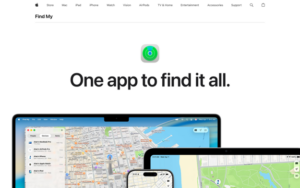
What services does Apple Find My offer?
Apple Find My, launched in 2019, covers tracking across the full Apple device lineup: iPhones, iPads, Macs, Apple Watches, AirPods, AirTags, and a growing list of third-party accessories. The platform runs on a network of over a billion Apple devices worldwide, which means it can locate a missing item even when that item has no active internet connection, by using nearby devices as silent relays. Location data stays encrypted and is only transmitted when a user actively requests it. For asset tracking at scale, that kind of infrastructure is hard to compete with.
Why Does Apple Find My Stand Out for GPS Tracking Apps?
The sheer size of Apple’s passive device network means Find My can track items in areas where a standard GPS signal would fail entirely, like inside a building or in a low-connectivity zone. That offline tracking capability, combined with 24-hour encrypted data retention and anti-stalking alerts, puts it in a different class from most consumer tracking apps.
What Users Are Actually Saying:
Users consistently call out the reliability of AirTag tracking and how well iCloud works with Find My as the main reasons they trust it over third-party alternatives. The anti-stalking notification feature also gets regular praise, which shows Apple thought about the ethical side of tracking, not just the technical side. The experience is Apple-only, so Android users are out of luck here.
Methodology Behind These Picks
The goal was to identify GPS tracking apps that hold up under real conditions, not just look good on a features comparison page. Here’s how the research was structured.
Gathering Information From Source Systems
The initial list was built by pulling data from multiple directions at once. App store listings, official product websites, user review platforms, and public directories all fed into the early pool of candidates. Each source gave a different angle: review platforms showed how real users experienced the app over time, while official sites revealed how each company positioned its main capabilities. That combination helped avoid relying on any single source that could be skewed in one direction.
The Shortlist Cut
From the initial pool, apps without verifiable real-world use at meaningful scale were removed first. Then review patterns were analyzed more carefully. Apps with suspiciously thin review histories or inconsistent feedback across platforms were excluded. The goal was to keep only options where the evidence pointed consistently in the same direction across multiple independent sources.
Fact-Checking the Picks
Claims made on official websites were cross-referenced against what users actually reported in reviews. Where a company claimed a specific feature or reliability standard, the review record was checked to see whether users confirmed it. Cases where marketing language didn’t match real-world experience were flagged and weighed against the overall picture.
Authority Signals and Industry Standing
Beyond reviews, each app was evaluated for signals that indicate standing in the broader location technology space. Mentions in relevant publications, recognition from industry observers, and scale metrics like download counts and active user numbers all contributed here. Apps that had been referenced in credible external contexts carried more weight than those relying entirely on self-reported data.
GPS Tracking Apps Track Record
The final check focused on location technology depth: dedicated feature pages for GPS-specific capabilities, verified reviews that mentioned accuracy, battery performance, or real-time update speed, and any evidence of the app performing in challenging conditions. Apps that showed a consistent record of delivering in these specific areas made the final cut. Those with only general positive sentiment but no evidence of location-specific performance were left off.
Picking the Right GPS Tracking Apps for You
Choosing between these three comes down to what you actually need the app to do. Here’s a quick framework to work through before committing.
- Industry/Domain Experience: Look at how long the app has been operating in the location technology space and what specific use case it was built around. iSharing’s 15 years of family-focused development is very different from Apple’s device-centric infrastructure.
- Features and Service: Match the feature set to your actual situation. Driving reports and panic alerts matter for parents. End-to-end encryption matters for privacy-conscious users. Offline device tracking matters for asset recovery.
- Pricing Structure: All three apps offer free tiers, but the value in those tiers varies. iSharing packs a lot into its free version (not cheap to build, but free to use). Zood runs free with optional upgrades. Find My is included with Apple hardware at no extra cost.
- Results Measurement: Think about how you’ll know the app is working. Location update speed, GPS accuracy radius, and geofence trigger speed are the metrics that matter most in day-to-day use.
- Industry Knowledge and Compliance: For tracking employees or minors, consent requirements under GDPR and CCPA matter. Pick an app with clear data privacy policies and transparent terms around who can see location data and for how long.
The Verdict
iSharing is the strongest pick for families who need real-time location sharing with depth, particularly for monitoring new drivers. Zood Location is the right call when data privacy is non-negotiable. Apple Find My wins for anyone tracking devices or physical assets within the Apple ecosystem. The location tracking space is moving toward tighter privacy standards and lower battery costs, so the apps that balance those two pressures well are the ones worth watching in the years ahead.