


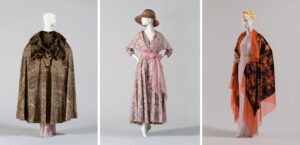
Caramoor Center for Music and the Arts is now offering its 2026 Rosen House Focus Tour: Inside Lucie’s Wardrobe every Friday and Saturday through Saturday, September 5, 2026, inviting visitors to discover Lucie Rosen’s fashions through a curated, docent-led experience. Jessa Krick, Director of Interpretation, Collection, and Archives at Caramoor, will lead a free talk about Lucie Rosen’s wardrobe, Conversations at Caramoor: Behind the Seams, on Thursday, June 25 at 5:30pm in the Rosen House Music Room.
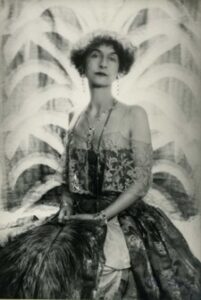
Lucie Rosen’s unique personal style made her one of New York City’s most recognizable women during her lifetime. For the first time in over thirty years, her unique fashions are displayed in the Rosen House, enlivened by photos and new research. The garments she treasured and saved, from the shimmering silks of the 1930s to the bold colors of the 1960s, together with her fancy dress costume based upon Sandro Botticelli’s Primavera and her joyful approach to dressing, provide the inspiration for a lively and fascinating tour.
Guests step into the Mediterranean-style villa that Walter and Lucie Rosen created as a home filled with music, art, and extraordinary collections. Docents share the stories behind the Rosens’ carefully assembled treasures and share new discoveries about the fascinating characters that helped to shape Lucie’s signature style, in these 45-minute tours.
Krick has developed this Focus Tour informed by the trove of Lucie’s garments dating from the mid-1920s through the 1960s, as well as by photos and other archival materials. The tour features eighteen dressed mannequins throughout the rooms of the Rosen House, plus accessories from the collection.
“We know she had many more dresses and outfits throughout her lifetime, based on the photos,” Krick says, “so the pieces Lucie saved must have had a sentimental value for her. They were the items she treasured.”
The central theme of the Focus Tour is how Lucie Rosen developed and displayed her personal style. Examples of her diaries and scrapbooks show her early interest in fashion, and images of her as a young woman demonstrate her nascent personal style. References to Rosen in the fashion press of the 1920s and 1930s are displayed in the early part of the tour.
Few of the surviving garments in Rosen’s closets have labels. Although custom-made clothing was not a rarity among women of Rosen’s social standing, Krick’s recent examination of her datebooks has revealed the name of her favored designer: Alan Kramer (1893–1985), mysteriously also known as Prince Tirtoff. This year’s tour is the first time Kramer’s name will be linked to Rosen’s sartorial choices, together with new biographical information about him and the extent of the long-standing professional relationship between the designer and his client.
Another notable piece on view is one of Rosen’s evening coats, which Krick now attributes to famed French designer Paul Poiret. Krick says, “This coat was previously mis-cataloged as a costume, but based on the embroidered orange velvet and striking color combination of orange and magenta velvet, which are both seen in a Poiret example from 1913 in the Victoria & Albert Museum, I am confident that this is a Poiret. We know Lucie was a Poiret client in the 1920s, so it may date from that period.”
Other examples in the collection show Lucie Rosen’s preference for dress designs apart from the mainstream of fashion, including a two-piece at-home ensemble newly identified as by her friend Ethel Wallace, Fortuny outerwear (and a dress of Fortuny fabric made outside of the Venetian atelier), custom-made fancy dress costumes, and a dress like those she wore for theremin concert promotion.
The Focus Tour traces the inspiration for Rosen’s unique dress sense, emphasizes her working relationship with designers and makers, and showcases how her choices fit into the historically inspired homes she and her husband Walter Rosen created in New York City and at Caramoor.