

River Journal asked the democratic primary candidates to answer a series of questions. At the time we went to press, we only heard back from two candidates. If we hear back from others, we will post their responses online.
The Democratic primary takes place on June 23 with early voting starting June 13. The District includes all or parts of Rockland, Westchester, Putnam, and Dutchess counties.
As a matter of policy, River Journal does not endorse any candidates.
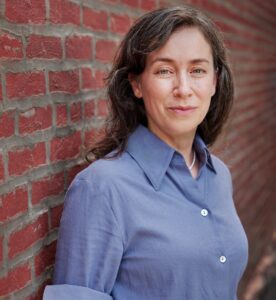
Effie Phillips-Staley is a Tarrytown village trustee who has held executive positions at nonprofits including vice president for strategic advancement at the Hispanic Federation, executive director of the Foundation for the Public Schools of the Tarrytowns, and director of capital and institutional advancement at The Kitchen in New York City.
What makes you more qualified than the other Democratic candidates for a seat in Congress?
My opponents are appealing too much to the right and thus compromising the Democratic values that present a true contrast to the Republicans. My approach is to build coalitions across the district and present a vision that serves the needs of the people, not the corporations and billionaires who fund campaigns. I am running for Congress because NY-17 deserves leadership that listens, leads with integrity, and fights for values we all believe in. I will fight proudly for humane immigration reform, the affordability needs of working families, fair tax reform, and equal opportunity and safety for all under attack in this draconian moment advanced by Donald Trump and Mike Lawler.
How can health care be made more affordable? Do you favor a public option for the Affordable Care Act? What about so-called Medicare for all, a single payer system for everyone? What do you propose to lower prescription drug prices?
I am a strong supporter of Medicare for All. It is the center of my healthcare platform and a key priority in my “Suburban Progress Agenda.” I believe health care is a human right that should be guaranteed to all people, especially in the wealthiest nation in the world. The current profit-driven insurance maze only serves to deny care to those who need it most.
Key features of my Medicare for All plan include:
- Guaranteed coverage for every resident, including primary care, hospitalizations, mental health, dental, vision, hearing, and long-term care.
- Zero out-of-pocket costs
- Full federal access to contraception and abortion services.
If the United States can spend over a billion dollars a day funding illegal foreign wars, surely, we can re-direct those resources to take care of our own people.
Should the federal government fund universal childcare, or what other options do you favor to bring down costs?
My Suburban Progress Agenda calls for universal childcare from birth to kindergarten. When childcare costs $2,000 a month per child, the system is failing parents by design. New Mexico has already implemented such a program, and the federal government should follow suit.
My childcare proposal begins by guaranteeing one year of paid family leave for new families. The first six months are paid and the second six months are job-guaranteed. I propose providing cash assistance to income-eligible families for the second six-month period. Following this, I propose providing universal school-based childcare from age 1 until kindergarten. Society should support raising families, not punish them economically.
What are your views on reforming ICE to address issues of undocumented residents, and do you support a pathway to citizenship for noncitizens?
I support abolishing ICE because, in its current form, the agency has become a rogue paramilitary force that has killed American citizens and destroyed families without accountability. I believe it is beyond reform.
ICE equates immigration with law enforcement by design. It was created in 2003 during the Bush War on Terror by joining the Immigration and Naturalization Services with Customs and Border Patrol. This framework allows ICE to operate with impunity at the direction of the president. Immigration is inherently a civil process, not a criminal one.
Your district includes some of the most expensive places to live in terms of overall costs and prices. What can the federal government do to help make it more affordable to live in the Lower Hudson Valley?
After healthcare and childcare, housing is one of the most important drivers of the current affordability crisis.
My Suburban Progress Agenda calls for building 5 million new homes across America at various price points over the next 10 years. Of those, 66,000 will be built right here in NY-17. We achieve this through direct investment in affordable housing and by establishing a federal tax credit for new construction or rehabilitation of affordable housing, among other proposals. I also support limiting annual rent increases on federally-subsidized housing units to 2% or the rate of inflation, whichever is lower. Finally, I support creating a first-time home buyer cash assistance program to help new buyers afford their down payments.