

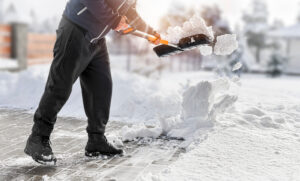
Each winter, hospital emergency departments see a surge in injuries directly related to snow removal. From back strains to heart attacks, shoveling is far more physically demanding, and dangerous, than many people realize. As Manuel (Manny) R. Peralta, PTA, a Doctor of Physical Therapy (D.P.T.) student at New York Medical College (NYMC), notes, “Snow shoveling combines awkward postures, heavy loads, and cold temperatures, the perfect formula for musculoskeletal injuries if you are not prepared and, particularly, if you are unfit.” Understanding the risks and taking preventive measures can keep you safe from injury when it snows.
The Orthopedic Risks: Back, Shoulder, and Knee Injuries
The most common musculoskeletal injuries associated with snow shoveling are pulled muscles, lower-back strains, rotator cuff injuries, and knee sprains. These typically arise from biomechanical factors such as a person using a poor technique or attempting to lift loads that are simply too heavy for their body to handle.
Bending postures that involve a heavy load held far away from the body, such as scooped snow on the shovel blade, combined with trunk twisting are particularly dangerous to the musculoskeletal system. As Peralta explains, “Most back injuries during snow shoveling occur when people bend at the waist and twist to throw the snow. This combination places excessive stress on the lumbar spine and intervertebral discs, significantly increasing the risk of injury. Using the legs to lift and pivoting the feet instead of twisting can greatly reduce this risk.”
Other tips to prevent orthopedic injuries include:
- Warm up for five–10 minutes with gentle stretching or walking. Cold, tight muscles are more prone to injury.
- Use an ergonomically designed shovel. A curved handle or lightweight material can reduce strain.
- Push rather than lift whenever possible; it’s significantly easier on both the spine and shoulders.
- Take frequent breaks to avoid fatigue. Muscles fatigue more quickly in the cold, and fatigue is a major contributor to accidents.
As Peralta puts it, “When a load feels heavy, it is heavy. Don’t overdo it, take the snow in smaller scoops, and rest when winded or when the muscles are fatigued. The goal is to remove the snow from the driveway or sidewalk, and you don’t win a medal for how quickly you complete the job – pace yourself and listen to your body.”
The Cardiac Risks: Why Snow Shoveling Can Trigger Heart Attacks
Snow shoveling is especially hazardous for older adults and individuals with underlying cardiac conditions. People with a family history of cardiac disease should be cautious particularly if they have known underlying cardiac conditions.
Heart-related emergencies are more silent, yet just as dangerous. The combination of strenuous exertion, cold air, and sudden bursts of activity can prompt a significant rise in heart rate and blood pressure. This is especially hazardous for older adults and individuals with underlying cardiac conditions.
Parmveer Kaushal, D.P.T., M.P.T., PT, CCS, Dr.P.H. candidate and assistant professor of physical therapy at NYMC, who has a specialty training in cardiac rehabilitation warns, “Shoveling can be a high-intensity exercise performed in low-temperature or even freezing conditions. For people who are unfit/sedentary or have heart disease, it can be equivalent to running a series of wind-sprints or performing repetitions of heavy weights such as in weightlifting.”
Physiologically, cold air causes blood vessels to constrict, shrinking in diameter, which makes the heart work even harder. Given that shoveling often involves short, forceful bouts of intensive lifting, it is precisely the type of activity that increases cardiovascular strain.
To reduce cardiac risks:
(Make sure to consult your doctor to determine if you are medically safe high-intensity activities like snow shoveling.)
- Know your risk factors. If you have a history of heart disease, chest pain, high blood pressure, or are over age 45, you may be at higher risk.
- Wear an extra layer to keep your body warm.
- Wear dry socks and comfortable, waterproof winter shoes if you have peripheral vascular disease. Inspect your feet after shoveling snow. Moisturize your skin.
- Start slowly and pace yourself. Treat shoveling like a workout with a warm-up, intervals, and a cool-down. Use a small-sized shovel to reduce the load on your body.
- Take frequent breaks if you feel you have over-exerted yourself.
- Avoid holding your breath while exerting yourself. This can dramatically spike blood pressure.
- Stay hydrated. Winter dehydration is common and increases cardiac workload.
- Avoid alcohol or a heavy meal before or after shoveling.
- If you feel heart attack symptoms, call 911 immediately.
Dr. Kaushal emphasizes, “The first sign of a heart problem during shoveling may be the only sign. If you’re sweating heavily, short of breath, or feeling chest discomfort, stop immediately and seek help. Call 911.”
Smart Tools and Strategies
Prevention is not only about technique, your tools matter, too. Snow blowers, while helpful, can still pose risks if used improperly. Use them on stable surfaces, keep hands away from the blades, and know how to disengage controls quickly.
Alternatively, consider breaking up the snow removal task: shovel early and often during a storm rather than waiting until the snow accumulates. Hiring help is also a perfectly valid safety choice, particularly for those with orthopedic or cardiac risk factors.
A Final Word
Safe snow shoveling requires preparation, proper technique, and self-awareness. As Benjamin F. Johnson, ED.D., M.A., vice dean of the School of Health Sciences and Practice, and professor of physical therapy and public health at NYMC summarizes, “The best musculoskeletal or cardiac injury is the one that never happens. Respect the intensive physical demands of snow removal, listen intently to your body, and take precautions before you pick up that shovel. Remember there is no shame in resting, it just means you may need a little more time to finish the job safely and healthily.”