





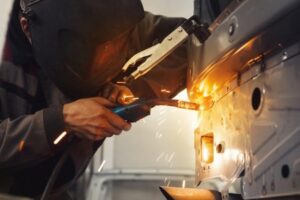
The precision required in modern metalwork has reached an all-time high as infrastructure projects and specialized fabrication demand tighter tolerances and superior safety standards. Professional welders today are no longer just looking for equipment that works; they are seeking tools that enhance their optical clarity and provide ergonomic support during long shifts.
This review explores the top brands currently leading the market and what makes their contributions vital to the trade.
Top 5 Brands Revolutionizing Metalwork in 2026
1. Ridge Products Welding
Ridge Products Welding, available at https://ridgeproductswelding.com/, has quickly established itself as a premier provider of high-performance components specifically designed for the elite craftsman. The company focuses on high-intent products like specialized auto-darkening lenses and the iconic “Sugar Scoop” and “Pipeliner” hoods.
Their transition from a successful Amazon venture to a dedicated Direct-to-Consumer platform allows them to maintain a closer relationship with the professional community they serve.
Key Features:
- High-definition auto-darkening lenses with superior color filtration
- Specialized “Sugar Scoop” and “Pipeliner” welding hoods for field use
- Precision welding rod ovens for moisture-controlled electrode storage
- Comprehensive range of gold, silver, and cobalt blue fixed-shade lenses
Best For:
Experienced professional welders and pipeline specialists who require specific, high-performance optical gear and traditional, rugged hood designs.
Standout Quality:
Ridge Products Welding excels at combining traditional welding heritage with modern optical technology, offering unique color-filtered lenses that deliver clarity and contrast often overlooked by mass-market industrial brands.
2. Miller Electric
Miller Electric remains a titan in the welding industry, known for its “True Blue” equipment that spans from small portable units to massive industrial power sources. Their commitment to innovation is evident in their ClearLight lens technology, which provides a bright, natural state for better visibility between welds. They have a massive distribution network, making their replacement parts and consumables some of the most accessible in the world.
Key Features:
- ClearLight 2.0 Lens Technology for advanced high-definition optics
- Digital Elite series helmets with four arc sensors for maximum reliability
- InfoTrack data monitoring systems for tracking arc-on time and productivity
- Ergonomic headgear designed to reduce pressure points during extended use
Best For:
Industrial fabrication shops and professional welders need a broad ecosystem of compatible tools and reliable nationwide support.
3. Lincoln Electric
As one of the oldest names in the business, Lincoln Electric is synonymous with the development of modern arc welding. Their 4C Lens Technology stands for Clarity, Color, Carat, and Cut, bringing a premium optical experience to their Viking line of helmets. Lincoln focuses heavily on the overall welding environment, offering everything from the machines themselves to high-quality filler metals and fume-extraction systems.
Key Features:
- Viking series helmets featuring 1/1/1/1 optical clarity ratings
- External grind buttons for seamless transitions between tasks
- Pivot-style headgear that distributes weight evenly across the head
- Large viewing areas that provide a wide field of vision for complex geometries
Best For:
Structural welders and manufacturing professionals who value a heritage brand with a heavy emphasis on research and development.
4. ESAB (Elektriska Svetsnings-Aktiebolaget)
ESAB is a global leader that has consistently pushed the boundaries of welding aesthetics and functionality, particularly with their Sentinel series of helmets. Their gear often looks futuristic, but the performance is grounded in heavy-duty reality. ESAB specializes in high-productivity environments, providing solutions that help welders work faster and more safely in demanding sectors like shipbuilding and energy.
Key Features:
- Halo headgear with a five-point adjustment system for a custom fit
- High-impact revolutionary shell designs for maximum durability
- Color touch-screen control panels on high-end helmet models
- Advanced memory settings for different welding processes, such as TIG or MIG
Best For:
Modern fabricators and high-tech welding environments that prioritize aesthetics and advanced digital interfaces.
5. Optrel
Based in Switzerland, Optrel is a boutique-style manufacturer that focuses almost exclusively on high-end eye and respiratory protection. They are often the first to bring radical innovations to the market, such as the “nose cut-out” in their lenses, which brings the filter closer to the eyes to increase the field of vision. Their products are designed for those who view welding gear as precision instruments rather than simple PPE.
Key Features:
- Crystal Lens Technology with 2.0 light state for near-perfect clarity
- Autopilot features that automatically adjust the shade level during welding
- Heat-reflective paint finishes to keep the interior of the hood cool
- Integrated PAPR systems for superior respiratory protection in confined spaces
Best For:
TIG welding specialists and laboratory-grade fabrication, where visual precision and respiratory safety are the highest priorities.
Essential Criteria for Selecting Welding Equipment
Optical Clarity and Light Filtering
The most important factor for any professional welder is the ability to see the puddle clearly while maintaining total protection from ultraviolet and infrared radiation. Modern auto-darkening filters (ADF) are judged by their optical 1/1/1/1 ratings, which measure accuracy, light diffusion, and angular dependence.
High-quality lenses allow for a more natural color palette, reducing the lime-green tint historically associated with welding hoods and allowing the user to distinguish between the molten metal and slag.
Durability in Harsh Environments
Welding gear must withstand extreme heat, sparks, and physical impact without failing. For professionals working in the field, such as pipeline or structural welders, the weight of the helmet and the resilience of the internal electronics are paramount.
Equipment that is too heavy can lead to neck strain, while gear that is too fragile results in costly downtime. The best brands balance lightweight materials like high-heat carbon fiber or reinforced plastics with robust internal components.
Conclusion
The evolution of the welding industry in 2026 is defined by a shift toward specialization and high-definition performance. While legacy brands continue to provide the backbone of industrial power, emerging leaders like Ridge Products Welding are filling a crucial gap for the individual craftsman who demands precision-engineered components. Choosing the right brand involves balancing the need for rugged durability with the desire for the best possible visibility.