

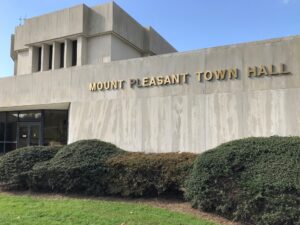
When Sergio Serratto looked at the political landscape in Mount Pleasant, he saw town government was missing an essential piece: There were no Hispanic elected representatives.
That was despite the fact that the town comprises the Village of Sleepy Hollow, whose population is more than one-half Hispanic.
As a member of the Westchester County Hispanic Advisory Board, Serratto felt the issues he was hearing about on the street were not being addressed at Town Hall, where he said there was little connection with his community. Come election time, candidates rarely visited Sleepy Hollow to gauge their concerns.
“I knew this was not a fair game for representation of the community,” said Serratto, who hails from Uruguay. “It was two separate worlds.”
When he came across the New York Voting Rights Act, which was signed into law in 2022, a light went on. “This is the law that can fix that issue,” he said.
In early 2024, Serratto and lawyer and lawmaker David Imamura brought the issue to the town’s attention, but the lack of a response led to Serrano and a handful of other plaintiffs to file a lawsuit against Mount Pleasant.
The lawsuit alleged the town’s at-large voting system “systematically prevented members of the Town’s minority Hispanic community from electing any candidates of their choice to the Mount Pleasant Town Board, thus denying the members of that community their most basic rights.” The result, the lawsuit alleged, was demoting the Hispanic community to second class citizens.
After two years of litigation, the Mount Pleasant Town Board voted March 10 to settle the lawsuit through an agreement that creates a six-district election system that includes one district encompassing most of Sleepy Hollow.
The settlement increases the Town Board membership to six plus the supervisor (who would still be elected at-large) effective for the 2027 elections. The town clerk, highway superintendent, receiver of taxes and court judges will continue to be elected at-large.
Under the three-district system:
- One district will represent the entire Village of Pleasantville.
- A second district will encompass an estimated three-quarters of the Village of Sleepy Hollow.
- The third district will encompass the unincorporated areas of the town (Hawthorne, Pocantico Hills, Thornwood, Valhalla) and have four Town Board members who are elected at-large within that district.
According to 2024 Census data, Mount Pleasant’s population was 45,052; Sleepy Hollow’s population was 11,427 and Pleasantville had 7,351 residents.
The settlement includes a $1.425 million payment for the plaintiffs’ attorney fees, most of which would be paid by the town’s insurer.
“This was a very hard-fought case,” said Town Supervisor Carl Fulgenzi. “We had some great advice from counsel, our own and the (outside) counsel that we had, and I think the Town Board had a very difficult time with this. We have to say, Let’s stop the bleeding. We don’t want to spend more taxpayer dollars, but we also want to be fair to our voters, and we think that this would be the best resolution.”
Imamura of the White Plains law firm Abrams Fensterman, who represented the plaintiffs along with the Election Law Clinic at Harvard Law School, called the agreement “a compromise, a good compromise. It ensures that the Hispanic population gets representation.”
“After years without having any say in their government, the Hispanic population of Mount Pleasant will finally have their seat at the table,” said Imamura, former chair of the New York State Independent Redistricting Commission. “We thank the Town of Mount Pleasant for working with us to ensure that voters of all races are able to have a voice.”
Imamura, who also serves on the Westchester County Board of Legislators, noted there are larger statewide implications for other municipalities. His firm also represented a challenge to the election system in the Town of Newburgh, which also settled the claims rather than go to trial.
“The New York State Voting Rights Act was designed to prevent exactly what happened here,” Imamura said, “because you had these municipalities that instead of immediately coming to a resolution, they had to pay millions of dollars to both their own attorneys and to the plaintiffs’ attorneys to get to a resolution that they could have done three years ago. … The message from these cases is that municipalities should immediately comply.”
The Village of Sleepy Hollow was not a plaintiff in the lawsuit, but Mayor Marjorie Hsu commented: ”We very much look forward to having our Village represented on the Mount Pleasant Town Council.”
Serratto noted that the single-member district format’s benefits extend beyond Sleepy Hollow. “Anything that’s good for Sleepy Hollow is good for everybody else,” said Serratto, who lives in Pleasantville and is active with the Hispanic Democrats of Westchester. Running for office is “not in my plans today,” he said.
Serratto, who holds a degree in finance and international business from NYU, said he had mixed feelings about the settlement. “I’m happy they were doing the right thing, that they are complying with the law,” he said. “I’m sad that it took this long.”