




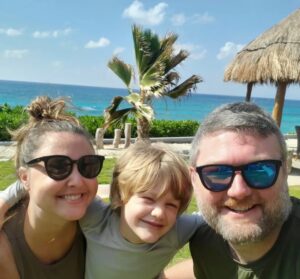
What started as a quiet family evening at home for Kelli Mackiewicz, 38, in November 2025 quickly turned into a nightmare scenario. While getting ready to put her son to bed, the Briarcliff Manor resident experienced some pain in her chest, which soon extended to both of her arms, along with numbness.
Kelli’s husband called 911, which arrived within minutes. But for Kelli, “it felt like forever.” Once on the scene, paramedics took her vitals, which were normal, and an EKG, which appeared reassuring. Her symptoms didn’t fit the classic heart attack mold, leading first responders to suggest she was likely suffering a panic attack.
She wasn’t.
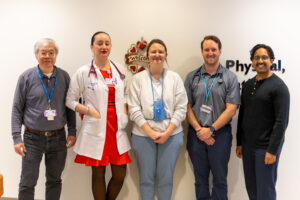
Kelli’s was taken to Northwell’s Phelps Hospital that night, where blood tests revealed critically high troponin levels – a definitive indicator of heart muscle damage. Despite the pain subsiding and Kelli appearing outwardly calm, the medical team recognized the unusual presentation, suspecting she may have a type of heart attack called Spontaneous Coronary Artery Dissection (SCAD). The next day, Navjot Sobti, MD, interventional cardiologist and women’s heart health expert at Northwell’s Northern Westchester Hospital, performed an angiogram on Kelli, confirming the diagnosis.
Unlike traditional heart attacks caused by plaque blockages, SCAD requires a specialized approach. Standard interventions like stents, commonly used to open blocked arteries, can actually worsen a delicate tear. For Kelli, Dr. Sobti prescribed a carefully tailored medication regimen, including beta-blockers and aspirin, to allow the artery to heal naturally.
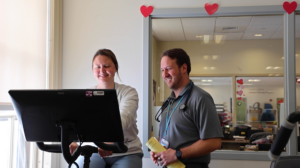
A crucial component of Kelli’s healing has been cardiac rehabilitation at Northwell’s Chappaqua Crossing facility. Anthony Trotta, an exercise physiologist at the center, explains that cardiac rehab is a supervised exercise and education program designed to help patients regain strength, confidence, and overall well-being. “Every goal is individualized,” Trotta explains. “We watch their heart closely with monitors, but we’re also building confidence and addressing the mental side of recovery.” Kelli attends sessions twice a week, working to increase her aerobic capacity and regain a sense of normalcy.
Today, Kelli’s heart has full recovered, according to Dr. Sobti. The women’s health expert stressed the importance of cardiac rehab, especially for SCAD patients. “Cardiac rehab is a powerful predictor of healing and reduced chance of recurrence,” she explains.
Yet, a significant disparity exists: women are historically under-referred for cardiac rehab, missing out on crucial physical and emotional support. “Patients often experience anxiety, depression, and PTSD after a heart attack,” Dr. Sobti added. “Rehab provides a guided environment where they can get back to being active and regain a sense of normalcy.
“After my heart attack, I worried often about it happening again,” Kelli said. “Cardiac rehab was a true turning point for me and I credit that to why I feel normal now.”
Today, Kelli’s heart has full recovered, according to Dr. Sobti. The women’s health expert stressed the importance of cardiac rehab, especially for SCAD patients. “Cardiac rehab is a powerful predictor of healing and reduced chance of recurrence,” she explains.
Yet, a significant disparity exists: women are historically under-referred for cardiac rehab, missing out on crucial physical and emotional support. “Patients often experience anxiety, depression, and PTSD after a heart attack,” Dr. Sobti added. “Rehab provides a guided environment where they can get back to being active and regain a sense of normalcy, which is hugely important for mental health.”
The takeaways message, Dr. Sobti concluded, is listen to your body. “You know your body well. If you have symptoms that are new or unique for you, take it seriously and advocate for yourself, just like Kelli did.“