




To address critical gaps in health care access for some of Westchester’s most vulnerable residents, Northwell’s Phelps Hospital is expanding its award-winning community paramedicine program with two vital new services: dedicated street medicine outreach for unhoused individuals and in-home behavioral health services.
This expansion will bring direct medical care and social services to Westchester’s approximately 1,659 unhoused households, addressing critical, often unmet health care needs. Concurrently, it will offer essential in-home support for individuals facing profound barriers to mental health treatment, ensuring continuity of care and managing medication where they live.
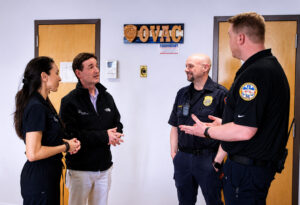
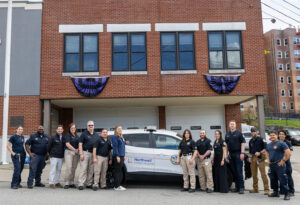
Both build on Phelps’ existing donor-funded community paramedicine program, launched in 2024 in partnership with Ossining Volunteer Ambulance Corp (OVAC). This unique model brings high-quality medical care directly into patients’ homes, where Phelps clinicians train OVAC paramedics to provide clinical assessments, treatments, and screenings with physician oversight. In its first year, the program demonstrated remarkable success: preventing 454 unnecessary emergency department visits and reducing hospital readmissions by 34% for enrolled individuals. The average emergency department visit in the U.S. cost $750 per patient, rising to $1,110 for adults 65 and older in 2021.
Initially focused on helping underserved populations and homebound seniors manage emergency medical situations, chronic disease and end of life care, patients were referred to the program from five pathways: emergency medicine, geriatrics, palliative care, hospital medicine and oncology.
“The success of community paramedicine has surpassed our most optimistic predictions, extending high-quality care beyond the traditional hospital setting and reducing unnecessary hospital visits and readmissions,” said Barry Geller, MD, associate medical director and chair of emergency medicine at Phelps Hospital, and the architect of the community paramedicine program. “This program is rooted in the conviction that all people are worthy of, and deserve, dignified care, which is why we are now expanding it to serve even more of our community members.”
To sustain and scale its efforts, Phelps has raised more than $400,000 — more than 60 percent coming from individual donors. In addition to increasing the number of patients served from the original five pathways, the funding enables it to add behavioral health and street medicine. “This vital philanthropic commitment, which also includes a $150,000 grant from the Phelps Community Foundation, allows Phelps to not only continue the existing program offerings but to bravely address critical new areas of need,” said Beata Mastalerz, president of Phelps Hospital.
Street medicine for unhoused individuals
Phelps and OVAC will deploy mobile health clinics offering medical evaluations, point-of-care testing and screenings, social work services, wound management, vaccinations and essential supplies like food and clothing. Modeled after the successful street medicine program on Long Island — a program of the Northwell Institute for Community Health and Wellness — this initiative was developed with guidance from Westchester homeless service providers, Phelps medical staff and behavioral health professionals. The program utilizes structured ‘Street Rounds’ where teams actively engage with unhoused individuals directly in their environments, prioritizing the establishment of trust and delivering care with compassion and dignity. Team members employ trauma-informed approaches and de-escalation techniques, ensuring safe interactions while addressing health care needs and identifying comprehensive follow-up services.
“Street medicine is ultimately about meeting people where they are, both physically and emotionally, and building trust before anything else,” said Edgar Cerna, AVP, Institute for Community Health and Wellness at Northwell. “We’ve seen firsthand on Long Island that when care is delivered with consistency, compassion and dignity, it can become the first step toward stability, connection and improved health outcomes. We’re proud to see this model continue to grow in Westchester through the leadership of Phelps Hospital and its partners.”
Behavioral health
Recognizing the profound challenges many face in accessing mental health care, the community paramedicine program will now offer in-home support, led by OVAC paramedics, for patients with behavioral health needs. Led by Yelena Zack, MD, director of psychiatry at Phelps Hospital, this service aims to ensure continuity of treatment plans, assess medication regimens, provide referrals to supportive services and reduce social isolation.
“We can meet patients where they are and do it with compassion. It’s truly incredible,” Dr. Zack said. “This continuum of care is designed to eliminate unfavorable outcomes in which a patient removes themselves from a treatment plan, providing a more thorough assessment in the comfort of their homes.”
A transformative model for patients and paramedics
In December 2025, Phelps and OVAC leaders received national recognition for their work in equitable patient care at the recent Institute for Healthcare Improvement (IHI) Forum, ranking among the top entries in the highly competitive Health Equity category. Their topic “Emergency Medical Services, an Unexpected Partner in Palliative Care” showcased the innovative community paramedicine program to thousands of global health care leaders. The team also presented the program to the Metropolitan Area Regional Office Health Emergency Preparedness Coalition, which included representatives from EMS and emergency management leaders from Long Island and the Hudson and Mohawk valleys.
Closer to home, the program’s achievements have also been recognized by the EMS Council of Westchester, which honored Dr. Geller and Shalom Sokolow, MD, emergency medicine physician at Phelps Hospital, in 2024 for their impactful work. In 2026, the EMS Council also honored Michelle Espinoza, MD, director of palliative care at Phelps Hospital, with its Dawson Award for her dedication to patient care and her role as a trusted community leader.
Beyond patient benefits, community paramedicine also empowers paramedics to practice at the full extent of their license, offering expanded career pathways and enhancing EMS retention. This innovative model transforms paramedics from episodic responders into integral members of the health care team, fostering ongoing relationships with patients and profoundly impacting their professional journey.
“This evolution not only supports professional growth and job satisfaction, but also deepens our partnership with Phelps Hospital, enabling seamless care coordination and lasting patient relationships,” said Nick Franzoso, EMS director and chief of OVAC. “Together, we help our community maintain health and independence well beyond the scope of traditional emergency response.”