Dental veneers are ultra-thin custom shells placed over the front of your teeth to dramatically improve your smile. They correct staining, chips, uneven spacing, worn enamel, and minor misalignment. In 2026, veneers remain one of the most requested cosmetic dental procedures because they provide fast, visible, and long-lasting results.
According to cosmetic dentists Dr. Emily Arambulo and Dr. Matin Tohidi, patients should focus on three things: enamel preservation, durability, and realism of appearance. In reviewing today’s options and speaking with professionals, the best dental veneers balance natural aesthetics with structural integrity — without unnecessarily damaging healthy enamel.
Below are two important comparison tables:
- First: the best true dental veneers placed by dentists
• Second: enamel-preserving and cosmetic alternatives
Best Dental Veneers in USA (2026)
| Rank | Option | Best For |
| 1 | Shiny Smile Veneers >> | Most Affordable Smile Improvement Without Enamel Removal |
| 2 | Porcelain Enamel Veneers | Most Natural Look & Long-Term Durability |
| 3 | Composite Resin Veneers | Lower Cost Professional Treatment |
| 4 | Lumineers (Minimal Prep Veneers) | Minimal Enamel Removal |
| 5 | Composite Bonding | Small Cosmetic Repairs |
#1 Shiny Smile Veneers — Affordable Snap-On Smile Cover (2026)
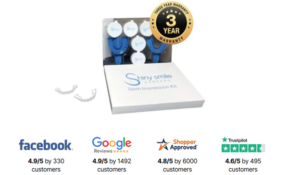 Shiny Smile Veneers are removable snap-on veneers — customized cosmetic dental covers that clip over your existing teeth to instantly improve the appearance of your smile. Unlike dentist-placed porcelain or composite dental veneers, these don’t require drilling, enamel removal, or a dental visit. They’re designed mainly for cosmetic use: enhancing tooth color, filling the look of gaps, and concealing chips or minor alignment issues.
What Shiny Smile Veneers Are & How They Work
Shiny Smile Snap-On Veneers are made from dental-grade materials and created from impressions you take at home. After sending back your molds, the company manufactures thin shells that “snap” over your natural teeth, giving the appearance of a smoother, whiter, more uniform smile.
- Non-invasive: No enamel shaving or dental procedures required — you simply wear them like a cosmetic accessory.
- Removable: You can take them out whenever you want — for eating, sleep, or oral hygiene.
- Custom fit: Made from your own dental impressions so they match your mouth.
Pros of Shiny Smile Veneers
✔ Affordable Smile Makeover
Shiny Smile Veneers cost significantly less than dentist-applied veneers — often a fraction of the thousands you might pay for porcelain veneers.
✔ Instant Cosmetic Boost
Because they clip on and aren’t permanent, you see results immediately — perfect for photos, events, or boosting confidence without a long treatment plan.
✔ No Permanent Changes to Teeth
There’s no drilling, drilling, or enamel removal, which means your natural teeth stay intact and unchanged.
✔ Flexible and Reversible
Since they’re removable, you have full control — wear them when you want and remove them when you don’t.
✔ Growing Positive User Feedback
Many customers report positive experiences with fit, appearance, and customer support, often mentioning the ease of the impression process and natural look.
Cons of Shiny Smile Veneers
✘ Not a Dental Treatment
These veneers don’t fix underlying oral health problems, real tooth alignment, or bite issues — they only cover what’s already there.
✘ Mixed Quality Experiences
While many users are satisfied, others report issues with fit, appearance, or customer service. Some reviews note poor fit and challenges with adjusting to the appliance.
✘ Temporary & Cosmetic Only
They don’t strengthen teeth, correct decay, or replace missing teeth — unlike real dental work, they’re a cosmetic overlay that must be worn to show results.
✘ Durability Limitations
Even though materials are designed to last, removable veneers are not as strong as permanent dental restorations and require careful handling.
✅ Visit Official Website (40% Off)
Shiny Smile Veneers vs. Dentist Veneers (Porcelain/Composite)
| Feature | Shiny Smile Veneers | Dentist Veneers (Porcelain/Composite) |
| Procedure | At-home impression + snap-on | Dental visits + procedure |
| Enamel Impact | None | Enamel removal often required |
| Permanence | Temporary, removable | Permanent |
| Cost | Low to moderate | High |
| Cosmetic Effect | Covers appearance | Changes teeth structure |
| Oral Health Benefit | None | Can improve strength/shape when done professionally |
Quick takeaway: Shiny Smile Veneers are a cosmetic, temporary solution — great if you want an affordable smile boost without invasive procedures. Dentist-placed veneers, in contrast, are a permanent dental restoration with structural and aesthetic benefits that go beyond simple cosmetic coverups.
Who Shiny Smile Veneers Are Best For
👍 Best fit for:
- People wanting an affordable cosmetic smile upgrade without dental work.
- Individuals who want to “try out” a new smile before investing in permanent options.
- Anyone prioritizing non-invasive, reversible solutions.
👎 Not suited for:
- People with significant dental issues (decay, gum disease, major alignment problems).
- Those seeking permanent results or improved dental health outcomes.
- Users expecting them to function like dentures or professional veneers.
Consumer Reports Verdict (Shiny Smile)
Shiny Smile Veneers are a practical, low-cost cosmetic option for those who want a quick, non-invasive smile transformation without permanent dental procedures. They offer good value and flexibility, but they’re not a replacement for professional dental veneers when you want long-lasting or clinically corrective results.
#2 Review: Minimal-Prep & “No-Prep” Veneers (Including Lumineers) — In-Depth Consumer Reports (2026)
Minimal-prep and “no-prep” veneers (often marketed under names like Lumineers) are ultra-thin porcelain shells that can enhance your smile without the extensive enamel removal required by traditional porcelain veneers. They have become a very popular choice for patients who want a conservative cosmetic solution — preserving natural enamel while still achieving a noticeable improvement in tooth appearance.
What Minimal-Prep / No-Prep Veneers Are
Minimal-prep veneers are similar to traditional porcelain veneers but are much thinner and require little to no enamel shaving before placement. Some cases may need a small amount of tooth surface smoothing, but overall, the natural tooth structure remains largely intact.
No-prep veneers are a subset of minimal-prep veneers designed to be bonded directly to your existing enamel with little more than light etching or conditioning. They’re sometimes referred to by brand names like Lumineers, Vivaneers, or Durathin veneers.
Pros of Minimal-Prep / No-Prep Veneers
✔ Preserves Natural Tooth Structure
Because these veneers require little to no enamel removal, your original tooth structure stays mostly intact — an important benefit since enamel does not regenerate.
✔ Less Invasive & Often Reversible
With minimal reduction or none at all, these veneers are among the least invasive cosmetic veneer options. In some cases, if change is needed later, your dentist may be able to remove them, unlike traditional veneers that require permanent enamel removal.
✔ Reduced Sensitivity & Quick Appointments
Because there’s often no drilling, numbing, or major tooth modification, most patients experience less discomfort, and the procedure can be quicker and easier than traditional veneers.
✔ Natural, Subtle Aesthetic Results for Minor Imperfections
These veneers can effectively address mild stains, small gaps, and shape irregularities while maintaining a natural look.
Cons & Limitations
✘ Not Ideal for Severe Cosmetic Issues
Because no-prep veneers are ultra-thin, they may not mask deep discoloration, major misalignment, or significant shape changes as effectively as traditional porcelain veneers.
✘ Potential for Bulkiness or Feel
Without enamel removal, some people notice a slightly “added layer” on the tooth surface, which can feel thicker especially on larger or more protruded teeth.
✘ Durability & Long-Term Expectations
While many minimal-prep veneers can last 10–15+ years with good care (similar to porcelain veneers), durability may be slightly less if bonding conditions weren’t ideal.
✘ Cost Still Significant
These veneers often cost similarly to premium porcelain veneers and are considered a permanent cosmetic investment rather than a cheap alternative.
Pros Compared to Traditional Porcelain Veneers
| Feature | Minimal-Prep / No-Prep Veneers | Traditional Porcelain Veneers |
| Enamel Removal | Little or none required | Moderate enamel shaving typically required |
| Invasiveness | Minimal — less drilling and fewer injections | More invasive — tooth reduction is standard |
| Reversibility | Often reversible when enamel untouched | Irreversible once enamel removed |
| Procedure Time | Often faster/fewer visits | Multiple visits often required |
| Aesthetic Range | Best for mild to moderate cosmetic issues | Best for major changes and masking deep stains |
| Longevity | ~10–15+ years | ~10–20+ years |
Who Minimal-Prep / No-Prep Veneers Are Best For
Ideal Candidates:
- You have minor staining, small gaps, or mild shape concerns.
- You prioritize preserving as much natural enamel as possible.
- You want a less invasive cosmetic solution without extensive drilling or anesthesia.
Not Ideal For:
- People with severe discoloration that needs thicker material to mask.
- Cases requiring significant shape or alignment corrections — traditional veneers or orthodontics may be better.
- Patients who want the maximum possible customization and long-term durability for complex cosmetic goals.
Cost & Longevity in Real-World Terms
Minimal-prep veneers typically fall into the same price range as premium porcelain veneers, roughly $800–$2,500 per tooth in 2026 — reflecting lab quality and custom fabrication rather than procedural simplicity.
When cared for with good oral hygiene and regular dental checkups, they often last around 10–15 years — comparable to conventional porcelain veneers for many patients.
Consumer Reports Verdict
Minimal-Prep and No-Prep Veneers are a strong “middle ground” cosmetic option: they strike a balance between conservative enamel preservation and long-lasting aesthetic improvement. They aren’t a one-size-fits-all solution — their best performance is in cases with moderate cosmetic needs and for patients who value enamel conservation over aggressive alteration.
#3 Review: Composite Resin Veneers — In-Depth Consumer Reports (2026)
Composite resin veneers are a dentist-applied cosmetic option that blend aesthetic improvement with accessibility. Rather than being custom-fabricated in a lab like porcelain veneers, composite veneers are crafted directly by the dentist using tooth-colored resin sculpted and hardened on your teeth in a single visit. (turn0search0)
This technique often appeals to patients who want a lower-cost professional solution that still provides meaningful improvements to their smile without the full investment required for porcelain. Dr. Emily Arambulo and Dr. Matin Tohidi both note that composite veneers are particularly valuable when budget and time are priorities — but the trade-offs in durability and long-term aesthetics should be understood before choosing this route.
What Composite Resin Veneers Are
Composite veneers are made from a tooth-colored resin applied and sculpted directly onto your natural teeth by your dentist. The resin is then hardened with a curing light, shaped, and polished to achieve the desired appearance. Unlike porcelain veneers, composites are chair-side restorations, meaning they can usually be completed in one appointment. (turn0search3)
Pros of Composite Resin Veneers
✔ Lower Upfront Cost & One-Visit Procedure
Composite veneers are generally significantly more affordable than porcelain — often costing much less per tooth — and can typically be placed in a single dental visit, reducing both appointments and travel time. (turn0search10)
✔ Less Invasive with Minimal Enamel Removal
Because resin can be bonded directly onto the tooth surface, composite veneers often require minimal preparation of the enamel. This can preserve more of your natural tooth structure compared with traditional porcelain veneers. (turn0search3)
✔ Easier & Cheaper Repairs
If composite veneers chip or fracture, they can usually be repaired directly in the dental office without needing a full replacement — a key advantage for active patients or those prone to minor impacts. (turn0search31)
✔ Immediate Results
Since they’re crafted directly on the tooth, composite veneers can show a major cosmetic transformation on the same day you visit the dentist. (turn0search3)
Cons & Trade-Offs
✘ Shorter Lifespan
Composite veneers typically last around 5–7 years on average — shorter than porcelain options — though with meticulous care, some may last up to 8–10 years in select cases.
✘ More Prone to Staining & Wear
The resin material used in composite veneers is more porous than porcelain, which means they can stain more easily from coffee, wine, or tobacco and might require regular polishing to maintain appearance. (turn0search32)
✘ Less Natural Translucency
While modern composites are much improved, they generally don’t mimic the light-reflective properties of real enamel as closely as porcelain veneers, so the most natural results are typically still achieved with ceramic.
✘ Durability Limitations
Because composite resin is softer than ceramic, it’s usually more susceptible to chipping or wear from regular use, especially for patients who grind their teeth or have a heavy bite. (turn0search8)
Durability & Longevity Compared to Porcelain
| Feature | Composite Resin Veneers | Porcelain Veneers |
| Typical Lifespan | ~5–7 years (some up to ~10) | ~10–15+ years |
| Stain Resistance | Moderate (stains more easily) | High (resists staining) |
| Appearance | Good, less natural than porcelain | Excellent, more enamel-like |
| Procedure Time | Often one visit | Multiple visits |
| Repair | Simple, same-day fixes | Complex, often replacement |
| Cost Upfront | Lower | Higher |
Who Composite Veneers Are Best For
👍 Best Fit For:
- People seeking a professional, affordable cosmetic option with credible results.
- Those who want a one-day smile upgrade without multiple dental appointments.
- Patients open to periodic touch-ups and maintenance rather than lifetime coverage.
👎 Not Ideal For:
- Individuals wanting longest-lasting results with minimal future replacements.
- Patients prioritizing premium, natural light-reflective appearance.
- Those with heavy biting forces or bruxism, unless protective measures are taken.
Composite Veneers in the Real World
In practice, composite veneers sit between temporary cosmetic snap-ons and premium porcelain restorations. They offer a dentist-applied solution that is less invasive and less expensive upfront — and in the hands of a skilled dental professional, can produce pleasing cosmetic results for many smile-enhancement goals. However, their shorter lifespan and greater maintenance needs mean they may need periodic replacement or refresh, especially if stained or worn. (turn0search15)
Consumer Reports Verdict
Composite resin veneers are an excellent mid-tier professional cosmetic option — more durable and natural-looking than removable snap-ons, but not as long-lasting or stain-resistant as porcelain. They are especially suitable for patients balancing budget, convenience, and aesthetic improvement, but patients should expect to revisit maintenance appointments over the years.
#4 Review: Pressed Ceramic Veneers — Strength + Esthetics for Moderate to Major Smile Changes (2026)
Pressed ceramic veneers are a premium porcelain-based option designed for patients who want both strength and high-level aesthetics. Unlike traditional layered porcelain veneers, pressed ceramics are created using a high-pressure fabrication method that produces a denser, more durable material.
In simple terms: they’re built to handle bigger cosmetic corrections while still looking natural.
According to cosmetic dentists like Dr. Emily Arambulo and Dr. Matin Tohidi, pressed ceramic veneers are often recommended when patients need:
- More structural reinforcement
- Stronger resistance to chipping
- Coverage for darker stains
- Slightly more aggressive reshaping
They sit at the high end of cosmetic dentistry — both in performance and cost.
What Makes Pressed Ceramic Veneers Different?
Pressed ceramic veneers are fabricated in a dental lab from solid ceramic blocks that are heat-pressed into shape. This process creates:
- Higher density
- Greater fracture resistance
- Stronger edge stability
- More durability under bite pressure
They are commonly used when patients want a dramatic smile transformation but still expect natural translucency.
Pros of Pressed Ceramic Veneers
✔ Superior Strength
Pressed ceramics are typically stronger than traditional layered porcelain veneers. They resist chipping better and are more stable long-term, especially for patients with heavier bite force.
✔ Excellent Aesthetic Masking
Because they can be made slightly thicker, they’re ideal for covering:
- Deep discoloration
- Previously treated teeth
- Minor alignment irregularities
They provide a very uniform, bright result.
✔ Long Lifespan
With proper care, pressed ceramic veneers commonly last 15+ years, making them one of the most durable veneer options available.
✔ Highly Customizable
Dental labs can craft detailed surface texture, shape, and contour for a very refined cosmetic finish.
Cons & Trade-Offs
✘ More Enamel Removal Required
Because pressed ceramic veneers are often slightly thicker than minimal-prep options, they usually require more enamel reduction than no-prep veneers.
This makes them:
- Permanent
- Not reversible
✘ Higher Cost
Pressed ceramic veneers are typically among the most expensive veneer options due to lab fabrication and material strength.
✘ Multiple Appointments
Unlike composite veneers, these require:
- Tooth preparation visit
- Temporary veneers
- Final bonding appointment
Pressed Ceramic vs. Traditional Porcelain Veneers
| Feature | Pressed Ceramic Veneers | Traditional Porcelain Veneers |
| Strength | Higher fracture resistance | Strong but slightly more fragile |
| Thickness | Often slightly thicker | Thinner layered porcelain |
| Enamel Removal | Moderate to significant | Moderate |
| Longevity | 15+ years common | 10–15 years typical |
| Best For | Bigger cosmetic changes | Balanced aesthetic upgrades |
Pressed Ceramic vs. Composite Veneers
| Feature | Pressed Ceramic | Composite Resin |
| Lifespan | 15+ years | 5–7 years average |
| Stain Resistance | High | Moderate |
| Repairability | Often replacement needed | Easy chairside repair |
| Cost | High | Lower |
Who Should Consider Pressed Ceramic Veneers?
Best Fit:
- Patients wanting a dramatic “Hollywood smile”
- Those with significant discoloration
- People wanting maximum durability
- Individuals prepared for permanent treatment
Not Ideal For:
- Patients wanting a conservative, enamel-preserving approach
- Budget-focused cosmetic improvements
- Minor cosmetic fixes (bonding may be better)
Consumer Reports Verdict
Pressed ceramic veneers are a premium-tier cosmetic dentistry option. They offer superior durability and masking power for patients seeking major smile enhancement. However, they require enamel removal and a higher investment.
If porcelain veneers are the “balanced gold standard,” pressed ceramic veneers are the high-performance upgrade for those wanting strength, longevity, and a bold cosmetic transformation.
5 Review: Temporary / Snap-On Veneers (2026) — Honest Dentist Perspectives
Temporary or snap-on veneers — also called clip-on, press-on, or pop-on veneers — are removable cosmetic dental covers made from resin or acrylic that fit over your natural teeth to instantly improve the look of your smile. They’re designed to be non-invasive and easy to use, but how do dentists really view them? Here’s what dental professionals and oral health experts say about these temporary smile solutions.
What Snap-On Veneers Are
Snap-on veneers are custom-made appliances that “snap” over your existing teeth like a thin mouthguard to cover stains, chips, gaps, and uneven shapes. Because they don’t require drilling or enamel removal, they’re marketed as a quick, painless smile upgrade you can wear and remove at will.
Pros of Temporary / Snap-On Veneers
✔ Instant Cosmetic Change
You can see a dramatic transformation in tooth color and shape within days, making these attractive for special events or photo-ready moments.
✔ Non-Invasive & Reversible
There’s no drilling, needles, or enamel shaving required, and you can simply remove them whenever you want.
✔ Lower Initial Cost
Snap-ons are typically cheaper upfront than permanent veneers placed by a dentist, with full-arch options often costing a fraction of traditional veneer treatments.
Cons & Professional Concerns
While the idea of a removable, no-drill smile upgrade sounds appealing, many dentists and oral health experts urge caution about these temporary appliances:
✘ Not a Dental Restoration
Snap-on veneers are cosmetic devices — not restorative dental work. They don’t address underlying dental issues like decay or gum disease and are not designed to strengthen or protect your natural teeth.
✘ Shorter Lifespan & Fit Issues
Most removable veneers don’t last as long as professionally bonded options and can wear, stain, or distort over time. Their fit may also shift during talking or eating, contributing to discomfort.
✘ Potential Oral Health Risks
Experts note that if worn regularly without meticulous hygiene, snap-on appliances can trap plaque and food particles between the veneer and natural teeth, increasing the risk of decay and gum inflammation.
✘ Dentists Often Recommend Alternatives for Long-Term Results
Many dental professionals emphasize that while snap-on veneers might be fine as a short-term experimental or event solution, they’re not a substitute for professionally designed bonded veneers when it comes to lasting oral health and aesthetics.
How Dentists & Professionals Really See Them
- Many dentists regard snap-on veneers as temporary cosmetic tools — useful for trying out a new look or boosting confidence for an event, but not a primary solution for long-term aesthetic or functional dental improvement.
• Dental professionals often point out that while easy and removable, snap-ons don’t integrate with your bite the way bonded veneers do, and can feel bulky or unnatural if not professionally designed.
• Experts also caution that ongoing daily wear without proper care can create hygiene challenges that may negatively affect oral health.
Temporary Veneers Compared to Permanent Options
| Feature | Snap-On / Temporary Veneers | Permanent Veneers (Porcelain/Composite) |
| Enamel Impact | None | May require enamel removal |
| Procedure | At-home impression or simple lab steps | Dentist visits, bonding process |
| Longevity | Short-term (months–few years) | Long-term (many years) |
| Oral Health Benefit | None | Can improve shape, strength, and bite |
| Cost | Lower upfront | Higher upfront |
Who Snap-On Veneers May Suit
👍 Best For:
- People wanting a temporary smile boost (e.g., weddings, photos) without dental procedures.
- Those curious about how a new smile could look before choosing permanent options.
👎 Not Ideal For:
- Anyone with underlying dental health needs (decay, gum issues).
- People seeking durable, long-lasting smile restoration.
- Individuals who want their veneers to function like real teeth rather than just look good temporarily.
Consumer Reports Verdict
Temporary or snap-on veneers can be fun, affordable, and effective as a short-term cosmetic smile enhancer, especially if you aren’t ready for permanent dental procedures. However, most dentists agree that they shouldn’t replace professional veneer treatments when your goal is long-lasting, functional, and truly natural results — especially if oral health is a priority