




More adults younger than 50 are being diagnosed with certain types of cancers, a worrisome trend that has prompted the Northwell Cancer Institute to launch a highly specialized, comprehensive program designed to improve prevention, detection, treatment and outcomes. Northwell’s new Early-Onset Cancer Program (EOCP) supports patients in Westchester with colorectal and breast cancers, which are the two leading causes of cancer death among Americans ages 18 to 49.
Based at Northwell’s Phelps and Northern Westchester hospitals, the EOCP aims to enhance awareness among both the community and healthcare providers about early-onset cancer trends and provide clear pathways for timely diagnostic evaluation and specialized care for symptomatic or at-risk younger adults. According to the American Cancer Society (ACS), more than 10% of estimated cases of colorectal cancer and 16% of breast cancer are in those younger than 50, but catching it early presents unique challenges. Symptoms may be subtle or mistaken for other conditions, and cancer is often not initially suspected in younger individuals. Current screening recommendations are typically focused on older age groups, which presents another barrier and can lead to later-stage diagnoses.
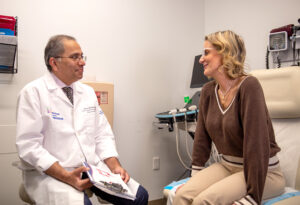
“While the exact reasons for this alarming shift in incidence are still being studied, this trend underscores the critical need for specialized programs designed to identify and treat early-onset cancers,” said Parul Shukla, MD, co-director of the EOCP and regional chief of colon and rectal surgery at Northwell Health. “By providing tailored support and resources across the cancer continuum, we aim to significantly improve the quality of care and outcomes for this growing population.”
The EOCP employs a robust and proactive approach to identifying and guiding young adults. Patients can access the program directly or be referred through a broad network of specialists within Northwell, including experts in genetics, onco-fertility, sexual health, social work and lifestyle medicine. This expanded network and proactive engagement mean that younger adults who might not otherwise suspect cancer, or whose symptoms could be mistaken for other conditions, are quickly identified and guided towards comprehensive evaluation. Once in the program, patients receive integrated, multidisciplinary care with a team of cancer specialists working collaboratively to tailor treatment plans.
“The EOCP spans the cancer continuum by offering state-of-the-art care through our exceptional Northwell providers and implementing proactive preventive strategies to identify high risk young adults for earlier screenings, according to national guidelines,” said Christine Molmenti, PhD, MPH, co-director of the EOCP and associate professor and cancer epidemiologist in the Northwell Health Cancer Institute. “This will not only improve the quality of life for our patients but also enables us to advance our knowledge in this vital area of public health.”
The EOCP recognizes that effective care for young adults must also address their distinct life circumstances.
“The needs of cancer patients in their 20s, 30s or 40s are very different than those older than 50,” said Anna Komorowski, MD, regional chair of the Northwell Cancer Institute in Westchester. “We have patients who are navigating career beginnings, starting families or building their financial stability. Our program understands these unique life stages and offers integrated support for their distinct medical, emotional and social needs.”
Services available through the program include onco-fertility for family planning and fertility preservation, financial navigation for those impacted by loss of income, genetic counseling, social work, sexual health support and more, all complementing state-of-the-art treatment options. A core component of the EOCP is a dedicated nurse navigator, who provides personalized guidance, education and care coordination from diagnosis through treatment and recovery. This ensures patients have a consistent point of contact, expedites access to specialized care and strengthens support throughout their cancer journey.
“We applaud Northwell Health for launching the Early-Onset Cancer Program in Westchester County,” said Sherlita Amler, MD, MS, Commissioner of Health for Westchester County. “This innovative initiative directly addresses a critical public health concern as we see more young people affected by cancer. Providing specialized, integrated support systems like this is vital for our community, offering hope and tangible resources to patients and their families during a profoundly challenging time.”
As a pilot program, the EOCP will be continuously evaluated to help Northwell identify best practices and explore opportunities for expansion to other facilities and regions, potentially including other cancers that are increasingly affecting younger populations.
Colorectal cancer is currently the leading cause of cancer death in men and the second leading cause in women in this age group, while breast cancer accounts for the highest number of overall early-onset cases, according to the ACS. By 2040, research published in JAMA projects the most common early-onset cancers will also include thyroid, kidney and renal pelvis; and the most cancer-related deaths will be caused by colorectal, breast, lung and brain or other central nervous system.