



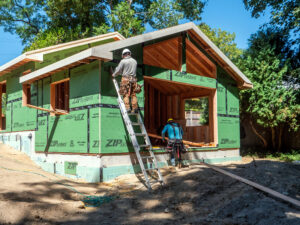
 Habitat for Humanity New York City and Westchester County, in collaboration with the Village of Croton-on-Hudson, hosted a groundbreaking ceremony to celebrate the construction of its first standalone accessory dwelling unit (ADU) under New York State’s Plus One ADU Program. The event took place at 2 Lounsbury Road, Croton-on-Hudson.
This milestone project is being built on the property of homeowners Walter and Lynn, who are creating a rental unit that will provide much-needed housing in their community while also supporting their family’s long-term financial goals.
“In the face of our unprecedented housing affordability crisis, the advancement of accessory dwelling units is a beacon of hope for New Yorkers,” said Sabrina Lippman, CEO of Habitat NYC and Westchester. “These units provide much-needed additional housing while enabling homeowners to generate supplemental income, build generational wealth, and support family members in need. This partnership with Croton-on-Hudson is a significant step toward a more equitable and sustainable future for all.”
The ADU at 2 Lounsbury Road is the first new construction unit underway from Round 2 of the Plus One ADU Program, and the first standalone ADU built by Habitat NYC and Westchester. The initiative reflects a substantial homeowner investment alongside funding provided by NYS Homes and Community Renewal, supported by Habitat’s technical and financial assistance.
“We really couldn’t have done this without Habitat’s support,” said Walter and Lynn. “The property lends itself perfectly to an ADU, and this will provide much needed housing here in Croton.”
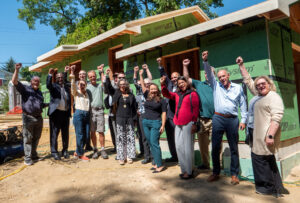 The Plus One ADU Program, administered by New York State Homes and Community Renewal, provides grants to municipalities and nonprofit organizations to help low- and moderate-income homeowners build or legalize accessory dwelling units. Habitat NYC and Westchester works directly with homeowners of Dobbs Ferry, Hastings-on-Hudson, Irvington, Cortlandt, Croton-on-Hudson and Yorktown to guide them through the design, permitting, and construction process, ensuring that each ADU is safe, high-quality, and tailored to the homeowner’s needs.
Mayor, Village of Croton-on-Hudson Brian Pugh said, “We are facing a generational housing crisis and the only solution is to broaden the housing options available in our community. Accessory dwelling units (ADUs) provide a powerful tool. ADUs offer a way for seniors to remain in their homes and for young people to return to the place they call home, all while giving homeowners an opportunity to be part of the solution. Thanks to Habitat for Humanity and the Plus One ADU Program, more families can now participate. Together, we are building a stronger community, one new home at a time.”
New York State Senator Pete Harckham said, “Accessory Dwelling Units are a win-win for our communities, which is why I introduced legislation to incentivize local governments to allow homeowners to build ADUs and supported funding for the Plus One ADU program in the State Budget. At a time when we are facing a severe shortage of affordable housing, this is a low-density solution that also lets seniors on fixed incomes gray in place and people with unique abilities live close by to loved ones. Congratulations to the Village of Croton-on-Hudson and Habitat for Humanity on the groundbreaking for this new ADU initiative.”
Assemblymember Dana Levenberg (Assembly District 95) said, “We have an urgent need to build more housing in New York State. I applaud Habitat for Humanity of New York City and Westchester, the Village of Croton, and my constituents who are taking advantage of New York State’s Plus One ADU program for being part of the solution. Through partnerships like this, we will continue to help more New Yorkers find an affordable place to call home.”
Emiljana Ulaj, Westchester County Legislator representing the Village of Croton said: “Congratulations to Walter and Lynn on taking this exciting step forward! The Village of Croton has been visionary in their efforts for how to address the housing shortage. ADUs offer homeowners like Walter and Lynn a way to increase their property values and generate extra income, all the while helping us address a need for more housing units.”
This groundbreaking marks a meaningful step forward in expanding housing options in Westchester County and demonstrates the power of collaboration between nonprofits, municipalities, and residents to address the housing crisis with innovative, community-driven solutions.