

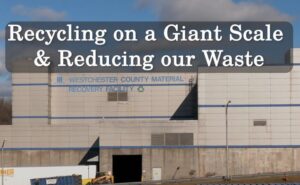
 Westchester County has released its comprehensive Waste Reduction Study, and the findings confirm that the County is leading when it comes to waste reduction. The study has also outlined a forward-looking strategy to further increase recycling, reduce waste and advance a circular economy in alignment with New York State’s goal of achieving an 85% recycling rate by 2050.
The Waste Reduction Study was commissioned to identify strategies that could significantly reduce the volume of waste requiring disposal within the County, including the Refuse Disposal District No. 1 (which encompasses approximately 90% of the County’s population). Barton and Loguidice was selected to conduct the study. The study was based on data collected from a variety of sources including public surveys and listening sessions, discussions with Department of Environmental Facilities (DEF) staff members, and a review of relevant case studies from other areas.
County Executive Ken Jenkins said: “Westchester County has long been a leader in environmental stewardship. This Waste Reduction Study lays out a clear path forward, one that builds on our success, strengthens our partnerships with municipalities and businesses, and ensures we continue protecting our environment for future generations.”
Commissioner of Environmental Facilities Vincent Kopicki said: “This study gives us the data, public feedback and policy tools we need to expand waste reduction efforts in a thoughtful, practical way. With continued collaboration, Westchester can meet, and potentially exceed, the State’s 2050 diversion goals.”
Department of Environmental Facilities First Deputy Commissioner Louis Vetrone said: “Westchester is a recognized leader in waste reduction and recycling, having reduced its residential waste by 27%. We are proud of the considerable success that the County has achieved in reducing waste. The Waste Reduction Study provides the roadmap for continuing on that path by enhancing our successful waste and recycling programs and adding new strategies designed to divert additional materials from the waste stream. The DEF team is excited to get started on this next chapter.”
Jenkins said: “The study aims to build upon DEF’s many successful programs and offers actionable strategies to address municipal and commercial waste streams with the goal of increasing recycling, composting and other strategies to reduce the total volume of trash that needs to be disposed of in order to meet or exceed what is required under the NYSDEC Solid Waste Management Plan.”
Findings
Westchester consistently achieves a recycling rate of at least 50%, surpassing the current New York State average of 43%. The County operates significant waste diversion infrastructure, including:
- The Daniel P. Thomas Material Recovery Facility (MRF), which processes approximately 64,000 tons of recyclables annually;
- The Household Material Recovery Facility (H-MRF);
- Transfer stations and specialized recycling programs for e-waste, textiles, boat wrap and document shredding;
- Residential Food Scrap Transportation and Disposal (RFSTAD), now serving 26 municipalities and diverting more than 1,100 tons of food scraps in 2024;
- Nearly 93,000 tons of yard waste diverted in 2024.
The study incorporates public input from more than 1,300 survey responses, community meetings and written comments, highlighting strong support for expanded food scrap composting, clearer recycling education and greater convenience for residents.
Recommended Strategies
The core of the study is an evaluation of ten major waste reduction strategies. The recommended strategies form a cohesive framework for advancing Westchester County’s waste reduction and sustainability goals with the aim of achieving the NYSDEC’s goal of 85% waste diversion by 2050. Several recommendations target increased participation in more urban areas, by proposing targeted outreach, expanded composting infrastructure, and education programs. Others build on DEF’s current and planned initiatives.
Recommendations include:
- Expand Organics Management (Both Food & Yard Waste Materials)
- This strategy focuses on reducing waste by optimizing organic waste diversion, primarily through education and regional partnerships with municipalities and non-profits.
- Get Back to Basics – Recycling Education Campaign
- Public feedback has revealed a considerable gap in residents’ awareness of the DEF’s current recycling programs and resources, highlighting the need for a targeted “Back to Basics” education campaign.
- Increase Multi-Family Building Outreach
- A recommended priority focus for DEF includes ensuring that multi-family units and complexes are complying with the Source Separation Law and are recycling. This strategy recognizes that meaningful participation requires not only tailored outreach and inclusive engagement, but also the physical infrastructure to support recycling and composting.
- Promote Reuse and Repair Cafes
- To strengthen waste reduction efforts and promote circular economy principles, Westchester County can promote Reuse and Repair Cafés to highlight and connect residents to existing reuse and repair resources across the region.
- Support Municipal and Commercial Construction & Demolition Diversion
- Construction and demolition (C&D) debris represents a significant portion of the waste stream, and targeted strategies can increase diversion rates. DEF should work with the Department of Planning to review the possibility of including a C&D recovery or recycling requirement in future RFPs and RFQs for County construction projects. Further, DEF should work with Planning to develop suggested language for C&D recovery or recycling that can be recommended for private construction projects that come before the Planning Board for review, and for local municipalities to incorporate into municipal projects.
- Maximize Diversion from the Commercial Waste Stream
- Strengthen DEF’s engagement with businesses to increase diversion, reduce contamination, and ensure compliance with the County’s Source Separation Law (SSL).
- Maximize the Benefits of Enforcement
- Strengthen Westchester’s existing enforcement mechanisms while integrating education and incentives to maximize impact. The key enforcement approaches included in this strategy are strengthening compliance monitoring, expanding inspection and reporting mechanisms, incentivizing compliance through positive reinforcement, and enhancing public education and outreach that clearly communicates regulatory requirements.
- Support State-wide Extended Producer Responsibility
- According to The Recycling Partnership, states with EPR policies can see significant increases in their recycling rates. For example, Colorado went from a 21% recycling rate to a 70% recycling rate, and an increase in Washington State from 52% to 75%. Theoretically, with EPR legislation at the state level, Westchester County could see an increase in overall residential recycling rates by 23 percentage points.
- Expand and Enhance Green Purchasing Opportunities
- To maximize waste reduction across County operations, Westchester should undertake a comprehensive review of relevant policies, including purchasing requirements, construction and demolition (C&D) protocols (as discussed in the prior C&D Diversion strategy), and other internal standards that influence material use and disposal.
- Emerging Material Recovery Facilities Technologies
- Recent innovations in material recovery facilities (MRFs) are reshaping the landscape of recyclables sorting. The complexity of separating mixed materials has outpaced traditional manual and mechanical methods. To address these challenges, facilities are adopting advanced sorting technologies that leverage artificial intelligence (AI), robotics, and sensor-based systems, which DEF has already done, to improve efficiency, accuracy, and throughput.
Next Steps
The report confirmed that Westchester County is a proven leader in waste reduction, with a 27% reduction in residential waste disposal from 2005-2024. That equals a reduction of over 140,000 tons of waste.
Now armed with a completed Waste Reduction Study, DEF will be incorporating the recommendations into the County’s Local Solid Waste Management Plan, which is reviewed and approved by the NYS Department of Environmental Conservation. The Plan sets out a 10-year implementation schedule for solid waste management activities, and the Waste Reduction Study recommendations will inform the inclusion of new programs. The County will be working with our municipalities and NYS officials on many of these initiatives.
The full Waste Reduction Study can be viewed by clicking here.
The Waste Reduction Study was made possible by a Board of Legislators initiative.