



Four River Town high school students have been named among the top 300 scholars in the prestigious Regeneron Science Talent Search, one of the nation’s most competitive science and math competitions for high school seniors. The annual program, run by the Society for Science and sponsored by Regeneron, recognizes students whose original research demonstrates innovation, depth, and real-world impact. This year’s honorees include Summerville Beckford and Natalie Partridge from Ossining High School, Elias Malionek from Briarcliff High School and Sophie Katherine Huang of Hackley School in Tarrytown.
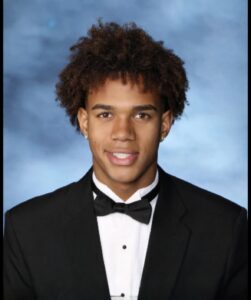
For Beckford, a 17-year-old varsity soccer goalkeeper, the research process was deeply personal. Accustomed to playing in high-pressure situations, he began to notice how stress negatively affected his performance in crucial moments. Rather than trying to eliminate the stress, Beckford became interested in understanding how stress could be reframed and used as a tool for growth. “I’m always in situations, where in a split second, stress can impact how I play,” he said. I wanted to see how I could use stress instead of letting it control me.” His project explored how immersive virtual reality paired with stress-mindset intervention, could help adolescents view stress as something beneficial rather than harmful. Beckford said his research applies to people of all ages. “Everybody experiences stress every day,” he said. “It’s really about learning to perceive it as something that can help you grow.”
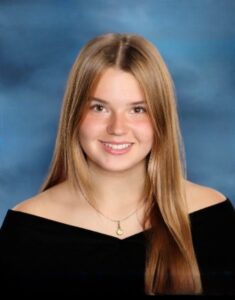
Partridge, 18, approached her research project from a different angle, rooted in her lifelong love for reading. When she joined the science research program, she decided to explore a topic that had always been meaningful in her life. As she reviewed existing research, she became especially interested in the connection between reading and empathy. Her project examined how reading interventions could foster prosocial behaviors in young children. Prosocial behavior is defined as actions that benefit others, in simple terms. “Prosocial behaviors are really important to develop at a young age,” Partridge said. “They affect how children form relationships with peers and teachers and how they move into adulthood.” Working primarily with first grade students, Partridge said the most challenging part of her project was logistical, including securing permissions from programs and families. Still, she found the experience deeply rewarding particularly seeing the impact firsthand. “Being able to turn something simple like reading into a meaningful research project showed me that if you care about what you’re doing, the effort matters more than the topic itself,” she said.
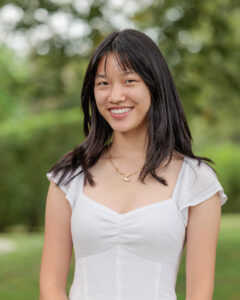
Huang, 17, traced her interest in biology back to an early personal experience. After adopting a pet hamster that passed away from lymphoma, she began questioning why humans and animals can develop similar diseases. “That’s when I learned that different organisms share basic cell machinery,” she said. “Defects in the machinery can lead to similar diseases.” Her research focused on how yeast cells protect their DNA, with the goal of better understanding how human cells defend against diseases such as cancer. Huang spent two years in the lab, learning techniques and designing experiments including one that ultimately produced a negative result. “A negative result isn’t a bad result,” she said. “You still learn from it, and it opens the door to new questions.” Huang said the experience strengthened her desire to continue studying biology and to mentor younger students, the same way her older peers once supported her.
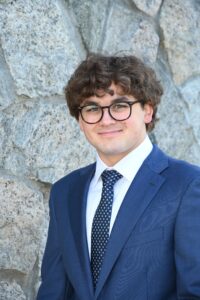
Malionek approached his research with a focus on addressing the stigma surrounding male mental health, a topic he said was both challenging and deeply personal. The purpose of his project was to help break down barriers for men who often struggle in silence, but recruiting participants proved difficult due to the very stigma he hoped to confront. “In order to even start the process of change, 22 brave participants had to step up in my school to face the stigma,” he said. Being named a Regeneron Science Talent Search scholar, Malionek said, was an honor he never anticipated. “I didn’t start my research with the goal of recognition in mind, I did it out of passion for such an important topic,” he said. The experience has inspired Malionek to pursue psychology and neuroscience in college. He will attend Bowdoin College in the fall of 2026 and hopes to continue research in the field, with the long-term goal of becoming a psychologist and researcher.
All four students described being named Regeneron Science Talent Search scholars as both validating and motivating. Beckford reflected on how the recognition helped him see himself beyond athletics, while Partridge said the honor boosted her confidence in her work and future goals. For Huang, the recognition felt like a meaningful reward after years of dedication. “Being recognized by expert scientists made me feel like all the hard work really paid off,” she said.
Together, the students represent the strength of Westchester County’s next generation of thinkers and innovators: young researchers whose curiosity, resilience, and passion for learning are already shaping meaningful contributions to science and their communities.
Other Westchester students in the top 300 included:
|
|
|
|
|
|
|
|
|
|
|
|
|
|
|
|
|
|
|
Now in its 85th year, the competition identifies extraordinary young minds who blend scientific talent, curiosity and bold leadership to drive meaningful change for society. Regeneron Science Talent Search alumni have gone on to win 13 Nobel Prizes, 23 MacArthur Fellowships, and have founded numerous world-changing companies, including Regeneron. The top 40 finalists will be announced on January 21.