


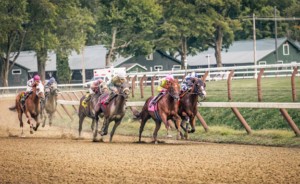
The Preakness Stakes rarely changes in a way that forces bettors to rethink their approach. The race follows the Kentucky Derby, the field tightens, and expectations begin to settle. That rhythm has held for years, which is why the 2026 shift stands out more than usual.
Moving the race away from Pimlico introduces a layer that cannot be ignored. It is not just a change in location. It alters how the race may unfold, how horses respond, and how bettors interpret what they see leading into post time.
Laurel Park and the New Preakness Landscape
The 2026 Preakness Stakes is being held at Laurel Park due to the ongoing redevelopment of Pimlico Race Course. This is part of a major state-backed project to rebuild Pimlico into a modern racing facility, intending to return the Preakness there in future years. For bettors, this is more than a logistical change.
Pimlico has hosted the race for decades, which means bettors have built a long history of assumptions tied to that venue. Race patterns, pace expectations, and even how certain trainers approach the Preakness have been shaped by Pimlico’s characteristics. That historical consistency is now temporarily removed.
Laurel Park, while also a Maryland dirt track, has not hosted a Triple Crown race in this context. That creates a situation where bettors cannot lean on traditional Preakness tendencies with the same level of confidence. Instead, they need to evaluate the race more like a neutral event.
This shift forces a reset in how the race is analyzed. It moves the focus away from legacy patterns and toward current form, adaptability, and how horses handle a different race environment.
Key Differences Between Pimlico and Laurel Park
Understanding how Pimlico Race Course and Laurel Park compare is essential when evaluating the 2026 Preakness Stakes, as subtle track differences can have a meaningful impact on race strategy and betting analysis.
| Factor | Pimlico Race Course | Laurel Park | Betting Impact |
| Track Layout | More compact overall | More open and spacious | Changes how races develop early |
| Turns | Tighter turns | Smoother, more gradual turns | Can favor different running styles |
| Early Positioning | Often crucial | Still important, but less urgent | Reduces pressure to secure the lead immediately |
| Pace Dynamics | Early speed often holds an edge | Tactical flexibility may matter more | Benefits horses that can adapt mid-race |
| Trip Potential | Traffic can become an issue quickly | More room to settle and adjust | May favor stalkers and versatile runners |
How Track Familiarity Affects Horse Performance
Track familiarity is often overlooked, but it can influence performance in subtle ways. Horses that have previously raced at Laurel Park will have already handled its surface, turns, and visual environment. That comfort can matter, especially in high-pressure races.
Not every horse adapts at the same rate. Some horses transition smoothly between tracks, while others show subtle but important changes in stride or balance on a new surface. These differences may not be obvious in past performances, but they can still shape how a race unfolds.
In 2026, horses coming from circuits that regularly include Laurel Park may have a slight edge in familiarity. Even one or two prior starts at the venue can provide useful experience compared to runners encountering it for the first time.
Bettors should look closely at track-specific history rather than relying only on overall form. A strong record elsewhere does not always translate directly when the setting changes, especially in a race where margins are often narrow.
How the Venue Shift Is Influencing Betting Markets
When a race moves away from its traditional venue, betting markets tend to react with less certainty. Without familiar patterns to rely on, early odds may reflect broader assumptions rather than strong conviction.
This is already visible in how horse racing preakness odds are forming for 2026. Instead of a clear separation between top contenders and the rest of the field, there is often a tighter grouping, as bettors account for the added variable of a new track.
Market movement may also be slower at first, with sharper adjustments coming closer to race day. Bettors often wait for additional information, such as workout reports or track impressions, before committing heavily to one side of the board.
This creates a different betting environment. It does not remove favorites, but it can reduce the gap between them and other contenders, which may lead to more balanced wagering across the field.
Adjusting Betting Strategy for the 2026 Preakness
Adapting to the venue shift begins with adjusting how information is weighted. Instead of relying too heavily on past Preakness trends, bettors should focus on current form, recent races, and how each horse has performed on similar tracks.
Track experience should be part of that evaluation. Horses with prior runs at Laurel Park or comparable tracks may offer more reliability than those stepping into an unfamiliar setting. This does not guarantee success, but it reduces one layer of uncertainty.
Pace analysis should also be revisited. Since Laurel’s layout can influence how races develop, bettors should consider whether early speed will hold as strongly as it might have at Pimlico, or whether mid-pack runners could have more opportunity.
The overall approach becomes more balanced. Instead of relying on established patterns, bettors are encouraged to combine multiple factors, including adaptability, recent performance, and how each horse might respond to the change in venue.
Where the Difference Becomes Clear
As the race approaches, the impact of the venue shift becomes easier to see. What once felt familiar begins to take on a different shape, with small details carrying more weight.
For bettors, this is where preparation meets observation. The ability to adjust expectations without overreacting often separates a measured approach from a reactive one. Track-specific clues, from morning workouts to how horses handle the surface, can offer valuable insight in the final days before the race. The 2026 Preakness may follow the same place in the calendar, though it does not carry the same assumptions. That difference is what makes it worth a closer look.