Police in Rye put out a notice in May 2026 that vehicle thefts across Westchester County were climbing again, mostly cars left unlocked in driveways with the key fob sitting in the cup holder or the centre console. The Rye department said agencies throughout the county had seen an increase involving cars left unsecured with keys or key fobs inside. Two months later, on July 15, Port Chester police were back with the same message after a run of overnight thefts in the Tower Hill area, noting that the thieves targeted mostly unlocked vehicles and that numerous towns have these similar issues on a continuous basis. I have covered vehicle theft patterns in the northeast corridor long enough to recognise when a county is cycling back through the same problem it had two or three years ago without having changed anything structural in between. Westchester is doing exactly that. The vehicle theft rate sits at about 1.649 per 1000 residents in a normal year, with the southwest end of the county running about 1 in 472 odds and the northeast closer to 1 in 1236. The estimated cost works out to roughly $70 per household annually, a number that sounds small in isolation but adds up across a county of nearly a million people.
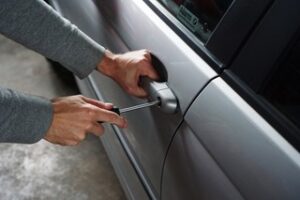
New Rochelle had seven cars stolen by mid 2026. Captain Collins Coyne, who runs the criminal investigations division there, said two of the seven had keys left in the vehicle. He made a point about proximity keys specifically, the kind that do not go into the steering column. “If you put them in your cup holder and forget and leave your car, it’s a free car theft for someone,” Coyne said. That quote has been circulating in local coverage since early this year, and it captures something I hear from law enforcement sources across the Hudson Valley constantly. The theft is not sophisticated. It is not relay attack hardware or CAN bus injection. It is somebody walking up a driveway at two in the morning, trying door handles until one opens, and driving away in a car that starts because the fob is inside it. Yonkers, which sits right next to these communities, reported a different trend. Detective Lieutenant Frank DiDomizio said thefts of vehicles were virtually flat versus 2025 and down 38 percent against the three year average. Thefts from vehicles were down 31 percent year on year and 48 percent versus the three year average. That gap between Yonkers going down and surrounding towns going up is worth paying attention to because it suggests displacement rather than any regional improvement.
The catalytic converter side of this has its own economics. Rhodium broke past $11000 an ounce in March 2026, roughly double what it had been through most of 2024 and 2025 when it sat around $5000. By May, it had dropped back to about $8500 but that is still high enough to make converter theft profitable for organised crews. Carfax reported more than 137000 converters stolen nationally in 2025. Westchester has a recent history with this. A county grand jury indicted five men for stealing 56 van and bus catalytic converters across eleven occasions between November 2021 and March 2022, with at least 42 of the converters recovered at a scrap yard in the Bronx. The crews were coming up from the city, hitting fleet vehicles parked overnight at municipal lots and church parking areas, then driving the converters back south to be processed. Governor Hochul signed legislation in October 2022 restricting purchase, sale, and possession of converters by dismantlers and scrap processors, and the state urged local governments to tap into $20 million in funding for plate readers, surveillance cameras, and related technology. GPS tracking data from fleet clients in the lower Hudson Valley shows the same overnight vulnerability window, roughly between midnight and five in the morning, that the Westchester converter ring was exploiting. Three or four years later, the pattern has not meaningfully changed.
What has changed, slightly, is the cost of doing something about it on the tracking side. The global GPS fleet tracking market hit USD 4.17 billion in 2025, projected to reach USD 8.34 billion by 2032 at a 10.4 percent CAGR according to Coherent Market Insights. That growth has pushed hardware prices down far enough that a basic GPS tracker with cellular connectivity and real time alerts costs less per month than most Westchester residents spend on a single car wash. The Red Hook case from January 2026 is a clean example of what that kind of device actually does in practice. A 2024 Subaru was reported stolen, and officers used GPS data to locate it traveling along Route 308 in Rhinebeck. They recovered the vehicle within about two hours. Jessica K. West, 39, of Rhinebeck, was arrested and charged with grand larceny of a motor vehicle. Two hours from report to recovery. Without the GPS data, that vehicle probably ends up stripped or across a state line before anyone finds it. I talked to a fleet coordinator who runs about a dozen service vehicles out of White Plains, not a large operation, maybe eight vans and four pickups. He installed tracking units on every vehicle in late 2024 after losing a van overnight from a lot in Elmsford. The total hardware cost was under $2000 for the fleet. His insurance carrier gave him a discount that covered about a third of the annual subscription within the first year, not because the carrier was generous but because the loss data on tracked versus untracked vehicles in the county made the actuarial case obvious.
The Westchester pattern is not complicated. Proximity keys left in vehicles, unlocked doors, no tracking, no recovery window. The police advice on every one of these incidents has been identical for years. Lock your doors, take your keys, do not leave valuables visible. That advice is correct. It is also clearly not working, because the same departments are issuing the same warnings every few months to the same communities. Yonkers is the one jurisdiction in the immediate area showing a decline, and DiDomizio did not attribute it to any single initiative. The $20 million in state funding for surveillance technology that Hochul announced in 2022 has been slow to deploy at the municipal level, partly because smaller Westchester towns do not have the administrative capacity to manage the grant applications. Port Chester police, in the July 15 notice, said they were working to address the issue. What that means in practice nobody I spoke to could specify beyond increased patrols, which is what every department says after a theft cluster and which has not produced lasting results anywhere in the county that I can see in the data.