


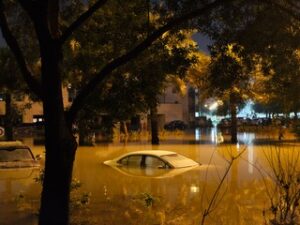
Kentucky sits third in the nation for water damaged vehicles on the road, behind only Florida and Texas, and that ranking didn’t come from hurricanes. Flash flooding between April and July 2025 hit the state hard, part of a spring storm season that damaged an estimated 45000 vehicles across Texas, Kentucky and West Virginia combined, according to data a major vehicle history provider released in early August. Florida leads the national count at roughly 82000 water damaged cars in circulation, Texas follows at about 63000, and Kentucky comes in at 32000. Pennsylvania, California, North Carolina, New Jersey, South Carolina, Illinois, and New York round out the top ten. The order of that list gets interesting when you notice that several of those states. Pennsylvania and Illinois, and California especially, had minimal direct storm impact. The cars are traveling. Faisal Hasan, a VP of data acquisition at the same vehicle history firm, put it bluntly in the August press release. The vehicles get cleaned up and sold elsewhere, he said. They look showroom fresh, and they’re rotting from the inside out. I’ve been covering vehicle fraud long enough to know that’s not an exaggeration.
The 45000 figure from spring and summer 2025 was actually a significant drop from the previous year’s mid year storms, which damaged an estimated 89000 vehicles between June and August 2024. But that comparison only tells part of the story because 2024 also brought Hurricanes Helene and Milton, which between them accounted for another 258000 flooded cars, pushing the full year 2024 total to roughly 347000, the worst since Hurricane Ian in 2022. The 2025 season started with those April through July storms, and NOAA was already predicting above normal Atlantic hurricane activity for the rest of the year, so the 45000 number was likely a floor, not a ceiling. All of this sits on top of an estimated 482000 water damaged cars that were already on US roads at the start of 2025 before any of the spring storms hit. The Florida Automobile Dealers Association has said that roughly half of all hurricane damaged vehicles eventually make their way back into the market, and that estimate tracks with what anyone in the used car trade can see at salvage auctions in the months after a major storm event. Insurance companies total and brand the titles and crush some of these vehicles, but not every owner has comprehensive coverage, and for those individuals, a ruined car is just something to dump at trade in or sell privately with no disclosure at all.
The gap in the system is the uninsured and unreported vehicles. NICB has repeatedly flagged that flooded cars belonging to owners without comprehensive coverage never enter the insurance claims pipeline, never receive a salvage or flood branded title, and never get recorded in any database. Their VINs simply never show up. A buyer can run a https://www.carvertical.com/gb/vin-decoder against every available record, and the car will come back clean because no institution ever logged the damage. The National Motor Vehicle Title Information System, NMVTIS, which the Department of Justice created specifically to prevent title washing, tracks branded titles across state lines and currently covers about 96 percent of US vehicles by VIN. It’s a useful tool. But it only works when the title actually gets branded in the first place, and for an uninsured vehicle that sat in three feet of Kentucky floodwater for a day and a half, the chances of that happening are close to zero unless the owner volunteers the information. Kentucky State Police has a Vehicle Investigations Branch based in Lexington that handles some of this, but the enforcement reality in a state with 120 counties and a used car market that runs heavily through private sales and small independent lots is that most flood cars move through the system without anyone looking twice.
Title washing is the other piece, and it’s been well documented for years. A car gets totaled and branded as salvage or flood in one state. Somebody buys it at a salvage auction, cleans it up, and drives or ships it to a state with weaker branding laws where they register it and get a clean title. Louisiana, Oklahoma, and Pennsylvania have all been named repeatedly in industry analyses as common wash destinations. The classic route runs from Texas through Louisiana and then on to wherever the buyer is, which can be anywhere in the country, including right here in western Kentucky. Only a handful of states maintain a specific flood title brand at all. Most use a generic salvage designation or nothing. And once a car has been washed through a lenient jurisdiction, NMVTIS should in theory catch the discrepancy, but in practice a licence plate check or a basic title search often misses it because the brand was never applied consistently to begin with. The wash works precisely because the system has gaps, and those gaps have been there since before anybody in Marshall County was worrying about spring flooding.
What frustrates me about this beat is how predictable the physical signs are and how consistently they get missed. A flood car almost always smells wrong, either mildew or the chemical cleaners used to cover it. Carpets that don’t match the rest of the interior, or carpets that feel damp when the weather is dry. Rust on the pedals, on the door latches, on unpainted screw heads underneath the dashboard. Pull the spare tire out of the trunk and look for a waterline or sediment. Pop the hood and check the engine oil, because if it looks like a milkshake, there was water in the crankcase. Moisture beading inside the headlight housings or the instrument cluster. Brittle wiring anywhere you can get your hands on it, especially under the dash and behind the kick panels. Corrosion on exposed bolts in places that don’t normally see moisture. A vin checker run through NMVTIS or NICB’s VINCheck catches the insured and branded ones, and that’s worth doing on any used car purchase, but the uninsured, unbranded ones only show up on physical inspection by someone who knows what they’re looking for, and most private buyers in Benton or Calvert City or Draffenville are not checking under the dashboard before they hand over cash.
The economics make it almost irresistible for the kind of small operator who buys at salvage auction and flips. Buy a flood damaged sedan for maybe 7000 or 8000 dollars, spend a couple thousand on detailing and cosmetics, sell it for 18000 to 22000 to a buyer who sees a late model car at a price that seems too good and doesn’t ask why. That’s 10000 to 12000 dollars in profit on a car whose wiring harness will start failing within a year, whose airbag sensors may or may not deploy correctly, and whose brake system probably has internal corrosion that won’t show up until it matters. A district level consumer case from Florida held a platform liable for selling a car with undisclosed flood damage, and there have been auto fraud lawsuits where auction records pulled during discovery showed the dealer knew exactly what they were buying. Those cases settle or win for the buyer eventually, but they require an attorney and time and money that a family in Marshall County buying a 15000 dollar used car for a daily driver doesn’t necessarily have available. The cars from this spring’s flooding in eastern Kentucky and the Appalachian counties are working their way through the pipeline right now. Some will end up at auction lots in Louisville or Lexington. Some will get shipped to states where nobody thinks about Kentucky weather. And some, probably more than anyone in Frankfort wants to admit, will end up on small lots and in private driveways right here in western Kentucky, looking clean, driving fine, and quietly corroding from somewhere the buyer never thought to look.