


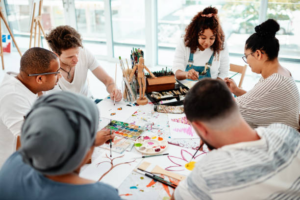
Can a painting class help neighbors get to know each other? Creative workshops offer more than a chance to learn a skill. They give people a reason to meet, talk, and work toward something together.
Libraries, schools, and community centers can host activities ranging from drawing and pottery to photography and simple crafts. These workshops encourage creativity while helping residents build friendships and feel more connected to their neighborhoods.
Why Creative Workshops Strengthen Neighborhood Connections
People often live near one another without having many chances to interact. A shared creative activity helps start conversations naturally and encourages people to participate in community life.
Making It Easier to Meet New People
During a group painting session, participants might exchange materials, ask for advice, or discuss their finished work. These small interactions can make future conversations easier.
Workshops also give newcomers opportunities to become familiar with local spaces, meet residents, and participate in neighborhood activities.
Connecting Different Age Groups
An intergenerational craft session allows children, parents, and older residents to contribute at their own pace. Activities such as collage making or decorating reusable bags work well because they do not require advanced skills.
Organizers should provide clear instructions and consider different physical abilities and experience levels.
How Local Artists and Organizations Can Work Together
Creative workshops depend on more than an interesting idea. Someone must plan the session, prepare materials, explain techniques, and manage the space.
Giving Independent Artists a Clear Role
Local instructors can introduce participants to techniques they might never try alone. For paid sessions, organizers should agree on fees, materials, cancellation terms, and responsibilities beforehand.
As community projects grow, organizations working with freelance professionals in the Art Industry may also need to consider clear agreements, payment arrangements, and responsibilities when organizing creative activities.
Choosing Spaces That Welcome Everyone
Public libraries and community halls offer familiar locations, but organizers still need to check seating, accessibility, lighting, and cleanup requirements.
A room suitable for drawing may not work for pottery or activities involving water. Choosing appropriate facilities makes participation more comfortable.
Practical Ways to Plan a Successful Workshop
A good workshop should leave participants with both a finished project and a positive experience. That starts with realistic planning and an understanding of community interests.
Five Things Organizers Should Check
- Interest: Ask residents which activities they would actually attend.
- Cost: Calculate instructor fees, supplies, and venue charges before setting prices.
- Skill level: Explain clearly when a session is designed for beginners.
- Group size: Limit attendance to what the instructor and space can comfortably support.
- Feedback: Ask what worked and which activities people would try next.
Providing shared materials can also make participation more affordable for families.
Conclusion
Creative workshops help local communities connect through practical activities. Their value comes from encouraging conversation, shared learning, and participation across different age groups.
With thoughtful planning, local artists, and accessible spaces, even a small workshop can become an activity residents look forward to repeating.