


Noteworthy as the home of Sing Sing Prison, Ossining may also lay claim to being the county’s foremost monument to the shifting trends in health care.
It’s a story that will be brought alive in “From Spiritual Care to Modern Medicine: How Ossining Learned to Heal Itself,” an integrative storytelling experience that speaks to the dramatic changes in health care, as well as the struggles and successes that are unique to the village itself from the 1770s to today.
It will be presented by Village Historian Joyce Sharrock Cole and the Open Door Care Network on Thursday, June 11 at 7 p.m. at Open Door’s newly opened home at 2 Church St.
The program is based on Cole’s research and a live performance by local actors, telling a story that spans 250 years of health care and highlights the continuum of Ossining “caring for itself,” from the Revolutionary War, when many blacks in the village received spiritual care at local churches; through the advent of dispensaries, apothecaries and (in some cases, questionable) remedies; to the creation of the long-since closed Ossining Hospital; and, to the growth of Open Door, a federally qualified health center, which today cares for nearly 60,000 people in Ossining and its other locations in the Lower Hudson Valley.
Included is a look at those individuals who helped shape that history, including Elijah Hunter, a double agent for the Continental Army who communicated directly with George Washington and later founded First Baptist Church, where enslaved people were able to worship and be baptized.
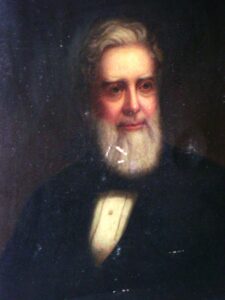
Centuries later, the church basement became Open Door’s first home; Benjamin Brandreth, an English-born entrepreneur who successfully marketed and produced in his Ossining factory the Vegetable Universal Pill, a cure-anything remedy that, in fact, was nothing more than a laxative; Dr. George Hill, the village’s first black doctor, a revered figure who in 1935 integrated the staff at Ossining Hospital (which would close in the late 1950s) and yet as many as 40 years later still found it difficult whenever he left town to find a local doctor willing to treat the village’s blacks; to the two women who founded and grew Open Door (its founder and first president Marge Griesmer, and Lindsay Farrell, a volunteer at the organization in 1984 who has been its second president since 1998).
The program is the brainchild of Farrell, Cole and Laura Mogil, a long-time board member of the Open Door Foundation. They both saw the significance of pairing Ossining’s 250th anniversary with that of Open Door, which recently celebrated its 50th year of service to the community.
“The Open Door is an important part of the history and fabric of the Ossining community, and this is a way to celebrate Open Door’s 50 years of service in the community as well as Ossining’s 250th anniversary,” said Mogil. One of their first moves was to get buy-in from Cole, a professional storyteller and Ossining’s historian since 2020, who was familiar with parts of the story, but said “it’s never been put all together before. I knew pieces of this history, but I had never seen them woven together in this way before. This program gives us a chance to tell Ossining’s story of healing as a continuous thread, from spiritual care and community support to the founding of Open Door.”
Community partners for the event are Bethany Arts Community, Briarcliff Ossining Ministerial Association, Congregations Sons of Israel, ENU Builds, IFCA, Gullotta House, JTC Experiences, Juneteenth Council, Kindle Community Inc., Assemblywoman Dana Levenberg, MVP Health Care, NAACP – Ossining Branch, Neighbors Link, Nonprofit Westchester, Ossining250, Ossining Chamber of Commerce, Ossining Children’s Center, Ossining Food Pantry, Ossining Padres Hispanos, Ossining Public Library, Ossining Riverworks and Westchester Women’s Agenda.
There is no charge for the event. Seating is limited.
PHOTO: Joyce Sharrock Cole
CAPTION: Village Historian Joyce Sharrock Cole will present an integrative storytelling experience that speaks to the dramatic changes in health care, as well as the struggles and successes that are unique to the village itself from the 1770s to today. Photo supplied
PHOTO: Benjamin Brandreth
CAPTION: Benjamin Brandreth, an entrepreneur who successfully marketed and produced in his Ossining factory the Vegetable Universal Pill, a cure-anything remedy that, in fact, was nothing more than a laxative. Photo Wikipedia