After a grim diagnosis of Stage IV cancer, a combination of immunotherapy and targeted therapy offered fewer side effects — and a cure.
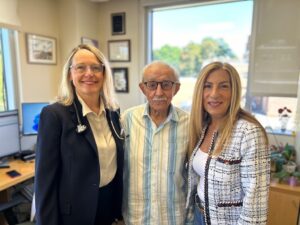
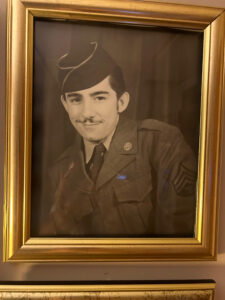
At 97 years old, WWII and Korean War veteran Teddy Grossi faced overwhelming odds. Diagnosed with aggressive Stage IV urothelial cancer — an unusually fast-growing and dangerous type — Teddy was told he had mere weeks to live without surgery to remove his kidney.
Up until his diagnosis, the devoted father of one, grandfather of two, and great-grandfather of three had maintained an active and largely independent lifestyle. Still driving on his own, he attended morning mass daily, typically followed by a visit to his favorite coffee shop in Mountainside, New Jersey where he lives with his daughter, Donna. At home, his favorite activity remains cooking, a skill he picked up in the army and continues to this day, often feeding all four generations of his family.
On a summer trip to Italy in 2024, he noticed that he “just didn’t feel right.” By December 2024, Teddy had no energy, no appetite and noticed blood in his urine. Diagnosed with a late-stage cancer at this late stage of life, he was convinced he was going to die. The grim prognosis led even his doctors in New Jersey to consider comfort care. Undeterred, Teddy decided to give treatment a shot and, through a family connection, he met with Michael Grasso, MD, chair of urology at Northwell’s Phelps Hospital in Sleepy Hollow. “The immediate concern was his kidney and ureter, which were the source of his profuse bleeding, which had already required multiple transfusions before he got to us,” Dr. Grasso said. “Without emergent surgery, he would not have made it.”
Urothelial cancer most often starts in the bladder but can also be found in the ureters and in the kidney (renal pelvis), where urine collects before draining into the ureter. Dr. Grasso performed the critical surgery on January 6, 2025, successfully removing the kidney and ureter — and revealing the full extent of the cancer.
“It was clear that the tumor had spread to the lymph nodes and, even though I removed many of them, the tumor had extended to other organs,” he said.
While Teddy initially improved after surgery, this was short-lived. Just six weeks later, new PET scans showed “voluminous tumor in the liver and pancreas, where there had been none before surgery,” Dr. Grasso explained. This meant his cancer was now spreading rapidly throughout his abdomen and, once again, Teddy was deteriorating. Recognizing the urgency, Dr. Grasso swiftly connected Teddy to Anna Komorowski, MD, regional director of the Northwell Health Cancer Institute in Westchester.”
“When I met Teddy, he was sitting in a wheelchair due to the severity of the disease,” she said. “We discussed whether or not he wanted to pursue further treatment. A lot of patients, particularly older adults, fear the side effects that come with chemotherapy or radiation and elect to do nothing and go home. But I recommended that Teddy try something that would give him a chance.”
Understanding Teddy’s reluctance for traditional chemotherapy and radiation, Dr. Komorowski put him on a cutting-edge combination treatment that carries very few side effects: immunotherapy (pembrolizumab, known as Keytruda) and a targeted therapy (enfortumab vedotin, known as PADCEV). This powerful duo effectively “supercharged” his immune system.
“Immunotherapy essentially supercharges the immune system,” Dr. Komorowski explains, “equipping it with the ‘superpowers’ needed to identify and destroy cancerous cells.”
The results were nothing short of miraculous.
After just one day on the PADCEV, he had his appetite back. After a few days, his pain was gone and he began to feel “normal,” Dr. Grasso recalled. After a few months, a PET scan showed no evidence of cancer anywhere in his body.
“It’s unbelievable,” Dr. Grasso said. “No one could have predicted it. While his age makes this that much more miraculous, this response would be amazing for anybody.”
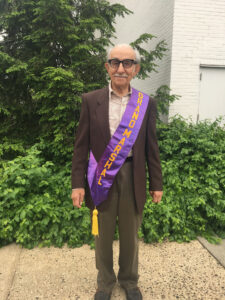
Teddy’s health improved drastically. He quickly shed his wheelchair and walker, regaining his independence and zest for life. “The good Lord put his hands on me,” Teddy said. “The doctors at Phelps Hospital and the good Lord gave me a second chance on life and I’m feeling great.”
Having just celebrated his 98th birthday on September 11, Teddy remains cancer free and continues to receive immunotherapy treatment. He encourages others who find themselves in a similar position to consider all their options and see if there is something that might just work for them.
“For me, he’s a miracle and his recovery demonstrates that with innovative therapies offering minimal toxicity, age should not be a barrier to effective cancer treatment,” Dr. Komorowski said.