




 When Ardsley filmmaker Gina LeVay Goldstein first met Shawn Cheshire during an ESPN assignment in 2015, she had no idea their meeting would eventually lead to a documentary following a 3,600-mile bicycle ride across the United States.
At the time, Cheshire, an Army veteran and single mother of two, was training to qualify for the 2016 Rio Paralympics after losing her sight following a brain injury in 2009.
Goldstein, who was also a new mother, found herself thinking about Cheshire’s experience long after their interview ended.
“I was struck by her story as a single mother with two young children, losing her complete vision and just trying to stay afloat in her new reality,” Goldstein said.
Four years later, Goldstein contacted Cheshire about the possibility of making a documentary. Cheshire had retired from professional racing and completed a historic crossing of the Grand Canyon without a sighted guide.
The two began working together, although neither knew exactly what direction the project would take.
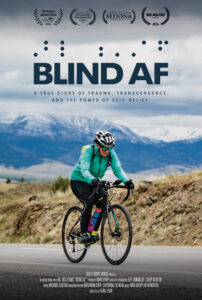
Their collaboration eventually became “Blind AF,” a documentary following Cheshire’s attempt to cycle 3,600 miles across the country on a single, non-tandem bicycle over 60 days. The film is scheduled to premiere on streaming platforms, including Amazon Prime, Apple TV, Tubi and Documentary+, on Oct. 28.
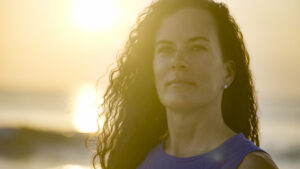
For Cheshire, the decision to attempt the ride was rooted in curiosity and a desire to determine her own capabilities.
“Part of the healing process was choosing to find my own limitations instead of the ones that society places on the blind community,” she said. “With every adventure I take on, I find more of who I am.”
Following her injury, Cheshire turned to adaptive sports as part of her recovery. She eventually competed in the 2016 Paralympic Games and became a 13-time U.S. national champion in paracycling.
Although the cross-country ride presented considerable physical challenges, Cheshire said the greatest difficulty was maintaining the concentration required each day.
“I would not say that the physical aspect of the ride was the hardest,” she said. “The mental focus it took on the bike every day was the most exhausting and difficult part of this journey.”
Rather than focusing on the full distance ahead, Cheshire learned to approach the ride one day at a time.
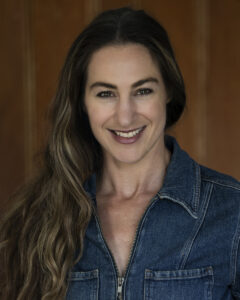
“I did not know that I would be able to pull this off,” she said. “So, I stopped thinking about it as a whole and focused on each day as it came.”
Among the moments she remembers most vividly was an encounter with wild horses.
“It was incredible to stand in a field with wild horses,” Cheshire recalled. “Feeling their energy while they feel yours. It was magical. Calming.”
For Goldstein, documenting the journey meant keeping pace with Cheshire and her team without interfering with the ride itself.
The crew filmed in real time over 60 days, capturing demanding stretches of the route without asking the cyclists to repeat moments for the camera.
Goldstein also incorporated animation and sound design to communicate Cheshire’s sensory experiences. Cheshire participated in discussions with the creative team to help them better understand her perspective.
As filming progressed, Goldstein learned more about Cheshire’s personal history and experiences with trauma.
The documentary gradually developed beyond its original focus on athletic achievement to explore recovery, independence and the process of rebuilding one’s life.
Goldstein said maintaining trust was essential, particularly when filming sensitive conversations involving Cheshire and her family.
“There has always been constant communication of safety, both emotionally and physically, and whether a line should or should not be crossed,” she said.
The production also worked with a post-traumatic stress disorder adviser to consider interview practices and potential triggers. Goldstein said participants were given control over what they chose to share.
For Cheshire, opening up about personal experiences was something that developed gradually as her friendship with Goldstein grew.
“When I started working with Gina, I did not know that I was ready to share all of these private parts of my story,” Cheshire said.
Over time, she became more comfortable trusting Goldstein with those experiences.
“I was not sure how she was going to tell my story. I trusted her completely,” Cheshire said. “I feel seen and heard.”
The film premiered at the Bentonville Film Festival and received Best of Fest recognition at the 2025 Sedona International Film Festival, according to its promotional materials.
Goldstein said audiences at festivals and screenings have included athletes, veterans, people with visual impairments and survivors of trauma, reflecting the different experiences explored in the documentary.
Although Cheshire’s blindness is central to the circumstances of her ride, she hopes viewers recognize that her story extends beyond disability.
“I don’t think the ride is about me being blind,” she said. “I believe it is much deeper than that.”
She also hopes the film encourages audiences to reconsider the assumptions they make about other people’s abilities.
“Assumptions are limitations. I love curiosity. There is growth and kindness there,” Cheshire said.
For Goldstein, the documentary represents a collaboration that began with an interview more than a decade ago and developed through years of conversations and filming.
“When I started this project, I didn’t know where it was going to go,” she said.
What emerged was a film about Cheshire’s cross-country journey and the personal experiences that shaped her decision to undertake it.
“Blind AF” will be available on streaming platforms beginning Oct. 28. To view the trailer, vistit blindafdoc.com/trailer.