



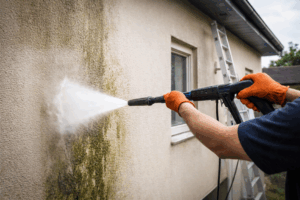
Every homeowner strives to keep their home clean. This requires not only regular cleaning of the interior but also periodic cleaning of the exterior walls and windows. This problem can be solved by hiring professional cleaners. Power washing in Milford, CT will quickly bring your home back to perfect condition. However, if you don’t have the time or resources to hire professionals, you can perform an express exterior cleaning yourself. We’ll explain how below.
Facade Pollution
Exposure to precipitation, exhaust fumes, soot, and smoke from industrial plants, and other adverse factors can cause the exterior finishes of buildings to become dirty, lose their visual appeal, or even deteriorate. Regular express façade cleaning can prevent this. With the necessary supplies and tools, property owners can quickly and easily update their finishes and give their home a well-maintained appearance.
Preparation for Cleaning
Before cleaning the exterior of a house, select cleaning products appropriate for the finish. Façades can be made of wood, concrete, brick, polymer building materials, plaster, or paving slabs. Buildings also feature façades of metal, sandstone, limestone, natural materials (granite or marble), or modern glass. It’s also important to consider the type and severity of the contamination. Dirt on a façade can be:
- organic (fungal spores, mold, moss, microorganisms);
- This is usually a layer of dust and small suspended particles found in the surrounding air.
Necessary Equipment
As for suitable equipment and tools, a telescopic mop and cloth or a high-pressure washer may be sufficient. Pressurized water effectively and effortlessly removes accumulated deposits and other dirt from surfaces. If you’re cleaning a tall building, a stepladder or ladder may be necessary. For multi-story buildings, it’s safer and more cost-effective to hire a professional façade cleaner.
Cleaning Procedure
The façade cleaning process includes the following steps:
- Assessing the surface condition and identifying the most stubborn stains.
- Pre-soaking areas with particularly heavy soiling.
- Taking necessary measures to protect window glass and frames, balcony doors, and other areas that may be damaged by water pressure.
- Selecting appropriate cleaning accessories and equipment.
- Cleaning the walls with a jet of water from top to bottom, periodically returning to pre-wetted areas with a high degree of soiling.
- Rinse the surfaces with clean water to remove residual dirt and chemicals after using cleaning agents.
Cleaning Various Facade Materials
The process largely depends on the wall material. Let’s discuss this in more detail.
Brick
Brick walls can be quickly cleaned of accumulated dust and dirt using a mini power washer and special attachments. First, close windows and doorways, as well as electrical panels and other utility lines, to prevent water from seeping into cracks and seams. Next, inspect all surfaces and identify the most heavily soiled areas, which should be pre-soaked with cleaning agents. After connecting the power washer, direct the stream toward the highest point of the wall and gradually rinse away the dust, moving over the entire façade. Finally, perform a final rinse to remove any chemical residue.
Clinker Tiles
Cleaning a clinker façade begins with cleaning the surrounding area and preparing the stairs. Tiles can be cleaned manually using stiff brushes, mops with telescopic handles, and special cleaning agents. In cases of severe contamination, stains can be removed locally using hydrochloric acid. For safety reasons, it’s best to wear a respirator and gloves when working with the chemical. After all areas have been treated with hydrochloric acid, you can connect a pressure washer and apply water under pressure to remove all chemical components from the façade. Finally, treat the building walls with a soapy solution and then rinse thoroughly with clean water.
Plastic
Houses with plastic exterior trim can be quickly cleaned in a few steps. Specifically, it’s necessary to:
- select cleaning products that won’t damage the trim and fittings;
- take measures to protect areas with defects (cracks, mechanical damage) – water applied under pressure can aggravate the situation;
- prepare equipment, hoses, and ladders for cleaning surfaces from top to bottom (to avoid streaks);
- clean walls with plastic panels using a medium-pressure jet.
Wood
Natural wood facades should be regularly cleaned of dust and accumulated environmental particles, as wood rot can begin in these areas over time. Moss can also form on wooden surfaces, spoiling the building’s appearance. A high-pressure washer is ideal for quickly cleaning natural wood facades, removing all dirt from exterior walls, and refreshing them. Removing moss and rot may require stiff brushes or, for example, a sander.
Stone
Street dust, dirt, and other environmental particles are particularly absorbed by natural stone, which is often used for building basements. To quickly and thoroughly clean it, you’ll need acidic solutions and brushes for manual removal of dirt. Alkaline solutions or solvents, as well as dirt-absorbing pastes, are suitable for removing organic compounds from stone surfaces and joints. Areas with more stubborn dirt are best treated mechanically. A grinder is suitable for this purpose, but working with it requires special skills and caution.
Window Cleaning
Once the exterior walls are cleaned, you can move on to cleaning the windows. Dusty glass with stains, streaks, and caked-on dirt requires a special approach. Window cleaning typically requires a stepladder, a telescopic squeegee, and specialized cleaning products. Considering that dried sand can enter from the street and scratch the glass, it’s important to pre-wet the window with water. Next, spray the cleaning solution. After a few minutes, remove the solution and dirt with a sponge or cloth, moving from top to bottom and wiping the tool after each pass. The most effective way to clean windows is with a glass cleaner. If you use the tool correctly and move it horizontally, it will leave streaks on the surface. This will save time on quick cleaning and eliminate the need to scrub the window panes with paper towels from the street.
Why You Need Professional Equipment
Professional window cleaners offer several advantages over home pressure washers, including:
- Equipped with special attachments that allow you to reach even the most difficult-to-reach areas of windows.
- Use of specialized cleaning agents that effectively remove dirt and leave no streaks.
- A safety system that protects the worker while cleaning windows.
- Reduced risk of damage to windows or frames, as professionals know how to clean windows properly and carefully.
By choosing specialized window-cleaning equipment, you can be confident in the safety and quality of the work. Don’t risk your health and the safety of your windows when you can use the services of professionals.
How to Protect Windows from Damage
Washing windows from the outside with a pressure washer can be convenient, but it can also damage your windows. It’s important to remember a few rules to avoid potential problems:
- Choose the right pressure. Using the right water pressure when using a pressure washer is crucial. Too much pressure can break the window glass or damage the rubber seal. Low or medium pressure is recommended for small windows.
- Use the right attachment. The pressure washer comes with different attachments designed for different surfaces. For window cleaning, we recommend using a soft attachment or a window attachment specifically designed for this purpose.
- Avoid direct contact with the window frame. When using a pressure washer, keep the nozzle at least 6 inches away from the window frame. Water can penetrate the frame or sill, causing damage. Use a cloth or sponge to protect the frame and sill from moisture.
- Be careful with insulated glass. Some windows have insulated glass, which can be more susceptible to damage from high water pressure or abrasive cleaning products. Before using a pressure washer on such windows, it’s recommended to consult with the window manufacturer.
By following these simple guidelines, you can clean windows from the outside with a pressure washer while minimizing the risk of damage to the windows and frame. In any case, before using a pressure washer to clean windows from the outside, always ensure the windows are in good condition and free of any visible damage or cracks, which could be worsened by using high water pressure.
Weather for Cleaning
If it’s raining or snowing heavily outside, cleaning windows with a pressure washer is not recommended. Water and soapy water can smear across the window, causing uneven surfaces and stains. Moisture on the windows can also take longer to dry due to unfavorable weather conditions.
It’s also important to consider the outside temperature. If it’s very cold, the water used for cleaning can quickly freeze on the glass, making the process not only ineffective but also dangerous. Avoid cleaning windows in high temperatures, as soapy water dries quickly on hot glass, leaving stains and streaks.
Also, pay attention to strong winds. Strong gusty winds can cause water to fly in all directions and splash onto adjacent surfaces, which not only increases cleaning time but can also damage objects or cause harm to others.
How Often to Clean Facade and Windows
It is recommended to clean building facades and wash exterior windows twice a year — after the end of summer and with the arrival of spring. However, exterior cleaning can be done more frequently to prevent the buildup of multiple layers of old dirt and conserve resources.