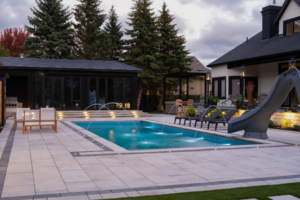



Both bluestone and travertine show up constantly in patio inspiration photos, and both are genuinely premium natural stone options.
But they perform quite differently once actually installed in the Hudson Valley’s real climate, and understanding those differences matters more than picking based on appearance alone.
What Actually Separates These Two Materials
Bluestone is a dense sedimentary stone, typically bluish-gray though it comes in variations, quarried primarily in the Northeast, which makes it a genuinely regional material for a Dutchess County project.
Travertine is a sedimentary limestone formed around natural springs, typically imported and known for its warm, light coloring and distinctive natural texture with small surface pores.
Why Freeze-Thaw Performance Is the Question That Actually Matters Here
Dutchess County genuinely experiences repeated freeze-thaw cycling each winter, and this is where these two stones diverge most significantly.
Bluestone is dense and has very low water absorption, which means it handles freeze-thaw cycling well, since there’s minimal moisture within the stone itself to freeze and expand. Travertine, being more porous, can absorb more water into its surface, and that absorbed moisture freezing and expanding repeatedly over multiple winters is a genuine long-term durability concern that doesn’t show up as clearly in a showroom sample as it does after several real Hudson Valley winters.
Why Sealing Matters More for One Than the Other
Given travertine’s natural porosity, proper sealing becomes considerably more important for this material in a freeze-thaw climate than it would be for bluestone.
A well-sealed travertine patio can perform reasonably well, but that seal needs genuine maintenance and reapplication on a consistent schedule, since a lapsed seal reopens the stone to exactly the moisture absorption that causes freeze-thaw damage over time.
Bluestone’s inherently lower absorption gives it more of a built-in safety margin if sealing maintenance occasionally slips.
Why Appearance and Design Language Still Matter
Bluestone’s cooler, more muted tones tend to suit a traditional Northeast home’s exterior particularly well, and its regional sourcing gives it a genuine sense of belonging in a Hudson Valley landscape.
Travertine’s warmer, lighter coloring reads as more Mediterranean or resort-style, which some homeowners specifically want as a deliberate contrast to a more traditional regional look. Neither is objectively better here, it depends on the aesthetic you’re actually going for.
Why Cost and Availability Differ Meaningfully
Bluestone’s regional sourcing in the Northeast generally makes it more cost-effective and readily available for a Dutchess County project than travertine, which is typically imported and carries the added cost that comes with that sourcing and transport.
This is worth factoring in alongside the performance differences, since a genuinely premium travertine installation costs meaningfully more than a comparable bluestone patio in most cases.
Why Base Preparation Matters Regardless of Which Stone You Choose
Whichever material you pick, the base preparation beneath it, proper depth of compacted crushed stone, matters enormously for how well either surface handles this region’s freeze-thaw cycling over time.
A premium stone installed over an inadequate base will still shift and settle regardless of the material’s own freeze-thaw resistance, which is why base prep deserves just as much attention in the decision as the stone choice itself.
Making the Right Call for Your Specific Project
The right choice depends on how much you value bluestone’s lower-maintenance, regionally-suited durability against travertine’s distinctive warm aesthetic and the sealing commitment that comes with it in this climate.
A patio contractor in Dutchess County who works with both materials regularly can walk through samples of each and help you weigh the real trade-offs for your specific property and design goals.
Getting Guidance Based on Real Regional Performance
Because freeze-thaw performance genuinely separates these two materials in a way that matters for a Hudson Valley project specifically, it’s worth discussing this directly with an installer who has seen how each material actually holds up locally over multiple winters, not just how it looks on day one.
A patio contractor in Dutchess County with hands-on experience across both stones can help you choose with a full, honest picture of the trade-offs.